

South Korean DMT Prices followed a mixed trajectory as fluctuating feedstock costs and cautious downstream demand continued to shape market sentiment. South Korean DMT export prices initially declined as ceasefire developments between the United States and Iran reduced geopolitical risk across global energy markets.
The reopening of the Strait of Hormuz, coupled with OPEC+’s gradual increase in crude oil production, accelerated the decline in global Crude Oil Prices and eased concerns over Middle Eastern supply disruptions.
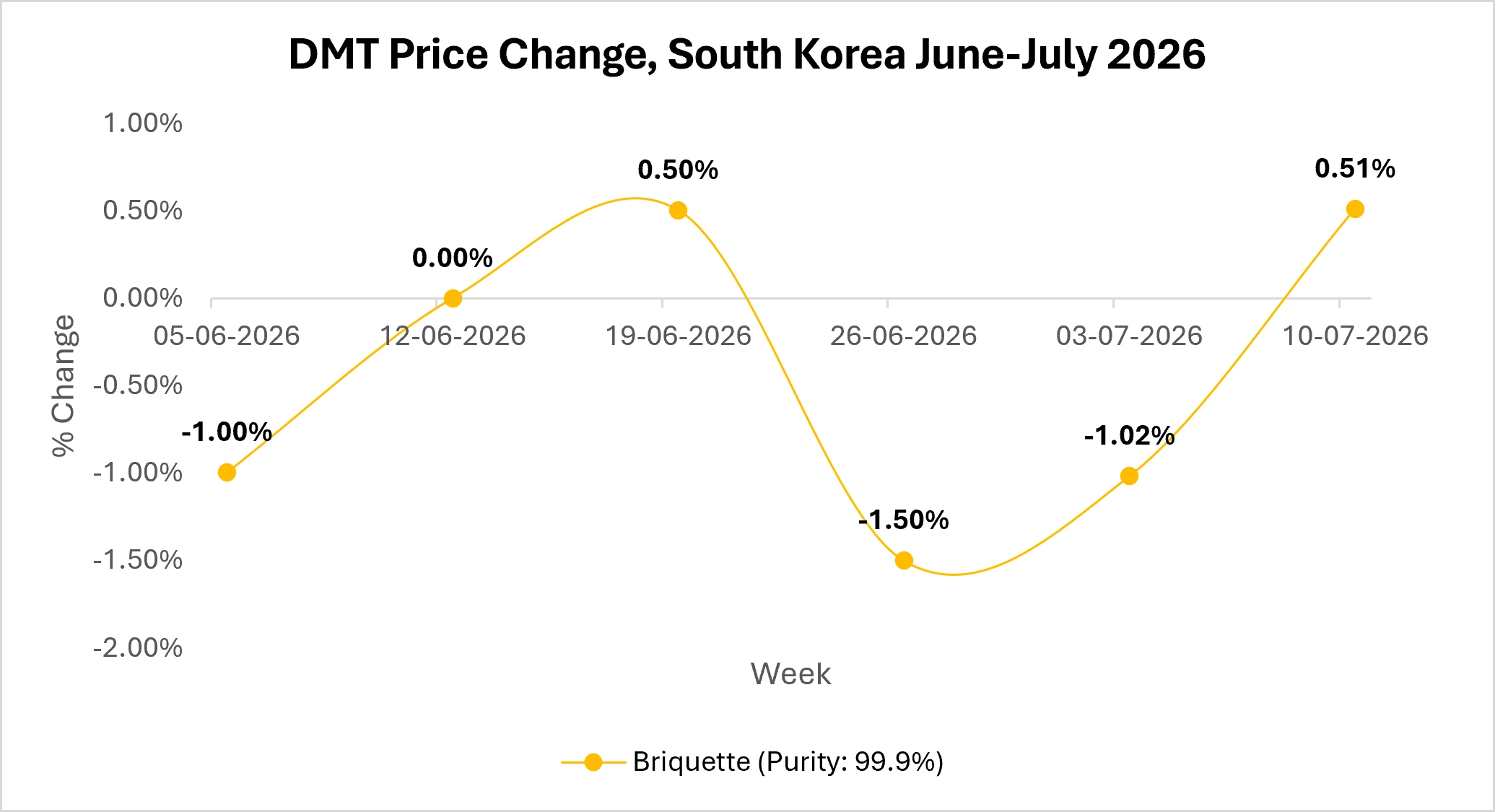
Source: Price Watch™ Dimethyl Terephthalate Prices
Lower Crude values reduced Paraxylene (PX) production costs, weakening feedstock support for DMT manufacturers and limiting their ability to maintain higher export offers despite stable operating rates.
In June 2026, DMT prices in South Korea remained largely range bound as periodic improvements in downstream buying offset the impact of softer feedstock costs.
Polyester Demand Provides Temporary Support
Market sentiment improved modestly during the middle of the period as several polyester producers returned for scheduled procurement, supporting a brief recovery in DMT prices.
Demand from PET resin and polyester filament manufacturers strengthened slightly after earlier inventory drawdowns, while steady production schedules encouraged limited replenishment buying.
However, buyers continued purchasing only to meet immediate production requirements instead of rebuilding inventories, preventing a sustained upward price movement despite improved sentiment.
Export Demand Remains Inconsistent
South Korean producers continued supplying DMT to key Asian markets, particularly China, but export demand remained uneven. DMT prices in South Korea continued fluctuating as cautious buying from Chinese polyester producers and comfortable inventories restricted stronger pricing momentum.
Moderate textile orders and balanced raw material availability encouraged buyers to maintain conservative procurement strategies.
Competitive regional supply further limited producers’ pricing power, resulting in renewed price corrections toward the end of June before the market recorded a modest recovery in early July.
Inventory-Focused Buying Limits Market Recovery
As feedstock costs remained relatively soft, buyers increasingly focused on inventory management rather than speculative purchasing. Comfortable stock levels across the polyester value chain reduced urgency for fresh procurement, while producers adjusted offers to remain competitive in both domestic and export markets.
Consequently, the DMT price trend in South Korea remained range-bound through June and into early July, with alternating weekly gains and declines reflecting the balance between feedstock costs and downstream polyester demand.
DMT Market Outlook
The near-term outlook for the South Korean DMT market remains cautiously balanced as participants continue monitoring crude oil movements, Paraxylene (PX) and PTA costs, polyester operating rates, and export demand from China.
While feedstock markets may continue influencing production costs, downstream polyester consumption is expected to remain the primary driver of pricing.
The bigger question is this: Will stronger polyester demand restore sustained buying momentum, or will cautious procurement and comfortable inventories continue to keep DMT prices in South Korea moving within a narrow range?
Price Watch™ continuously tracks weekly movements across the DMT value chain.
Follow Price Watch™ on LinkedIn for real-time raw material insights, pricing trends, supply chain intelligence, and market updates shaping global commodity markets.