

Polybutylene terephthalate prices have retreated across Asian markets as a combination of subdued downstream procurement and softening butanediol feedstock costs removes the twin supports that had underpinned valuations through the previous trading cycle.
Demand Weakness Weighs on PBT Consumption
The demand-side weakness is broad-based. Automotive connector and wiring harness manufacturers among the largest PBT consuming segments have pulled back procurement after completing seasonal restocking, with near-term inventory positions adequately covered and forward order visibility offering little urgency to build fresh positions.
Electronics and IT hardware producers have maintained similarly restrained buying strategies, reflecting persistent channel inventory overhang across consumer electronics categories that continues to suppress raw material procurement from upstream suppliers.
Softer BDO Costs Ease Production Pressure
The feedstock picture has compounded the demand softness. BDO values on an FOB Kaohsiung basis have eased in line with softer crude oil, gradually lowering the production cost floor for Taiwanese and regional PBT manufacturers. With feedstock relief visible to buyers and producers alike, the cost-side argument for holding firm on pricing has lost traction, and suppliers competing for restrained volumes have found it necessary to offer improved terms to maintain business relationships.
Comfortable PBT Supply Strengthens Buyer Leverage
Ample supply availability from Taiwanese and Chinese producers operating at healthy utilization rates has kept the market well-stocked, giving buyers the negotiating leverage to secure concessions that a tighter supply environment would not permit.
A durable price recovery will need either a confident revival in automotive and electronics sector procurement driven by deliberate inventory rebuilding and firming production schedules or a meaningful BDO cost reversal that squeezes producer margins and forces supply discipline back into the market.
Until one of those catalysts materializes, PBT buyers hold the advantage.
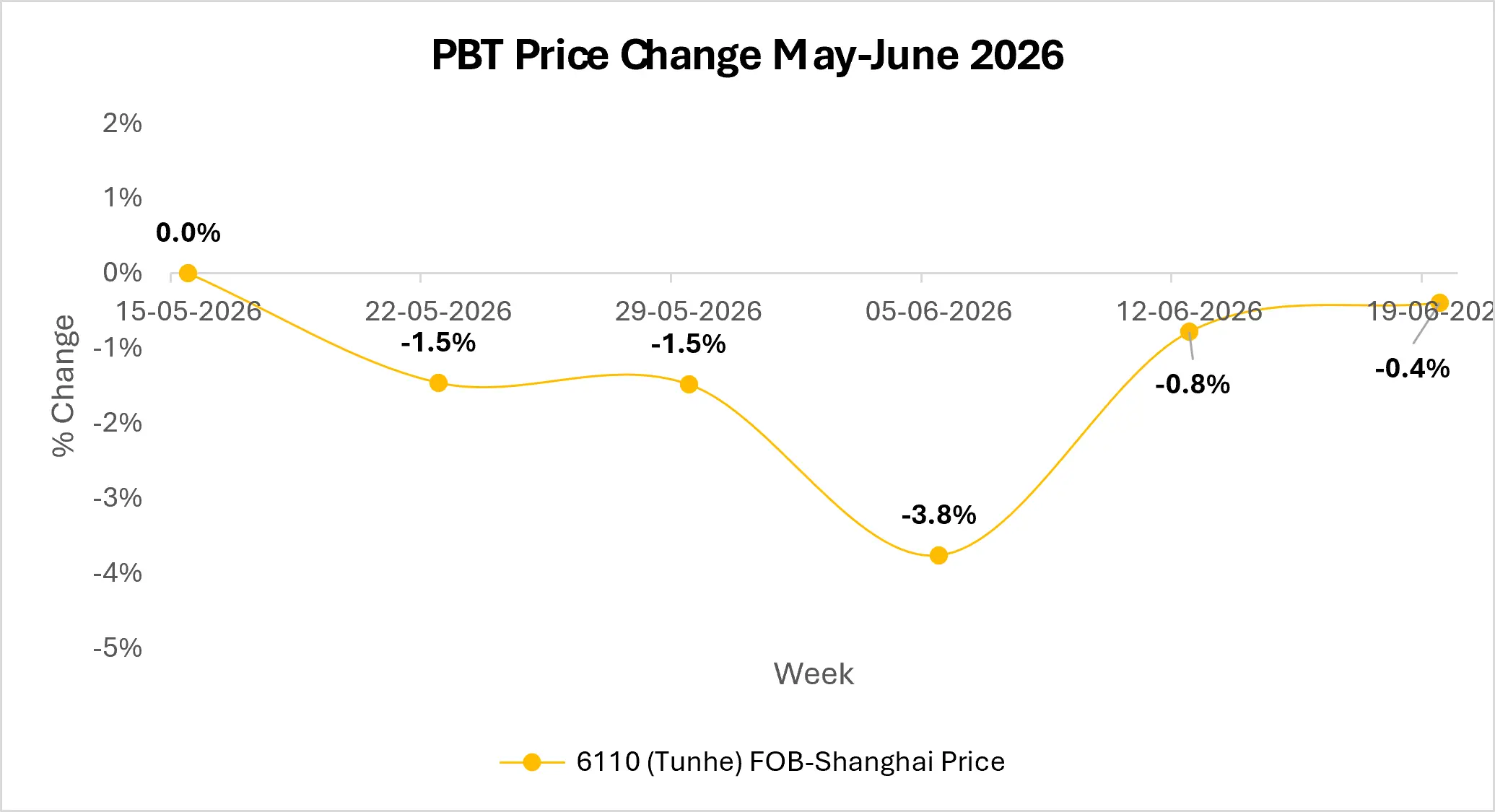
Source: Price Watch™ PBT
Polybutylene Terephthalate Market Outlook
The PBT market is expected to remain closely influenced by downstream demand conditions, feedstock BDO trends, and overall industrial activity across key sectors such as automotive and electronics. While relatively stable feedstock costs may offer some cost-side support, price movements will largely depend on the pace of demand recovery and procurement sentiment.
In the near term, PBT prices may continue to experience mild downward pressure, as cautious purchasing behaviour and sufficient material availability persist across major regional markets. Additionally, any fluctuations in freight rates and import flows may further influence landed cost dynamics, particularly in import-dependent regions.
To track exact price direction, regional spot prices, and procurement activity, subscribe to Price Watch™ today.
Follow Price Watch™ on LinkedIn for real-time raw material insights, pricing trends, supply chain intelligence, and market updates shaping global commodity markets.