

Global Dioctyl Phthalate prices declined during the third week of June 2026, led by softer market conditions. The downturn was primarily driven by easing geopolitical tensions between Iran and the USA, which reduced concerns over energy supply disruptions and weighed on crude oil prices after their earlier surge above $100 per barrel.
As a ripple effect, feedstock phthalic anhydride values weakened, lowering production costs for DOP manufacturers. Additionally, comfortable product availability and cautious downstream purchasing from plasticizer-consuming industries further pressured market sentiment and contributed to the overall price decline.
China DOP Market Weakens on Softer Feedstock Costs
Dioctyl Phthalate prices in China declined during the third week of June 2026, primarily due to easing geopolitical tensions between Iran and the USA, which reduced concerns over potential disruptions in global petrochemical supply chains.
Additionally, steady feedstock availability from the Middle East improved raw material accessibility, leading to softer phthalic anhydride prices and lower production costs for manufacturers.
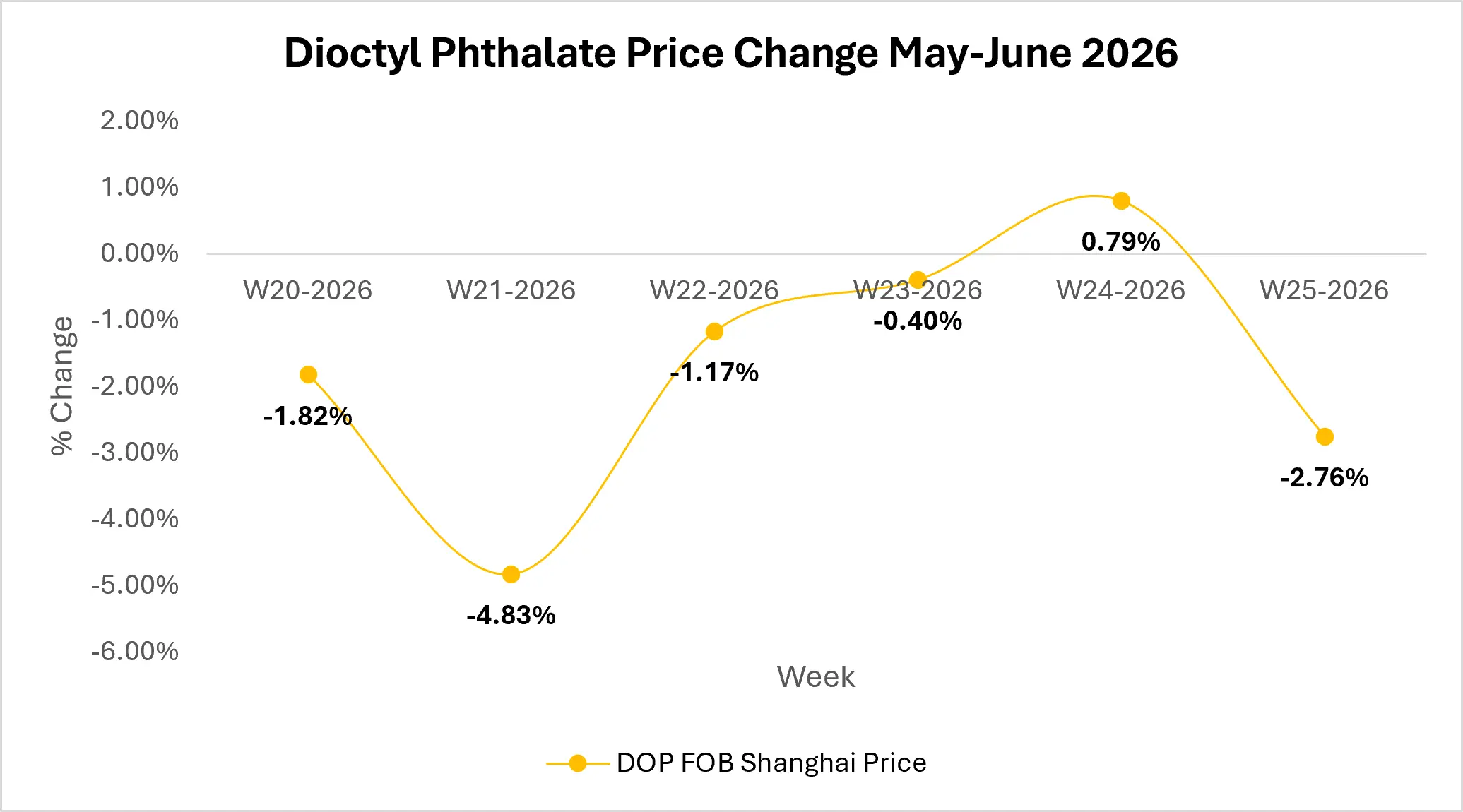
Source: Price Watch™ DOP Prices
Comfortable product availability and sufficient inventories further weighed on market sentiment, while cautious purchasing activity from downstream plasticizer-consuming industries limited demand support, collectively contributing to the overall downward movement in DOP prices across the Chinese market.
Dioctyl Phthalate Market Outlook
Dioctyl Phthalate prices are expected to face downward pressure in the coming weeks as phthalic anhydride and 2-ethylhexanol feedstock markets remain well supplied, easing production costs for manufacturers.
Improved feedstock availability and comfortable inventory levels across key Asian markets may further weaken market sentiment and limit price recovery.
Additionally, steady downstream demand from plasticizer-consuming industries could remain insufficient to absorb excess supply. Will crude and petrochemical feedstock supplies from the Middle East remain stable, or could renewed geopolitical disruptions trigger supply constraints alter the current market direction?
Follow Price Watch™ on LinkedIn for real-time raw material insights, pricing trends, supply chain intelligence, and market updates shaping global commodity markets.