

A clean May rebound did not survive June. That is the real signal in China Polypropylene Staple Fibre 6D 90mm. The six-week chart shows a small lift in mid-May, another push at month end, and then a sharp reset in the second week of June.
The move matters because it says the market could still lift on short covering, but it could not hold once buying slowed.
What changed in the China PPSF market
The main theme is a failed restocking window. In China, PPSF had already been supported earlier in 2026 by better demand from nonwoven, hygiene, and geotextile users, plus firmer polypropylene based costs.
That support gave suppliers room to raise offers. But the recent June drop shows that the lift was fragile once buyers stopped chasing material.
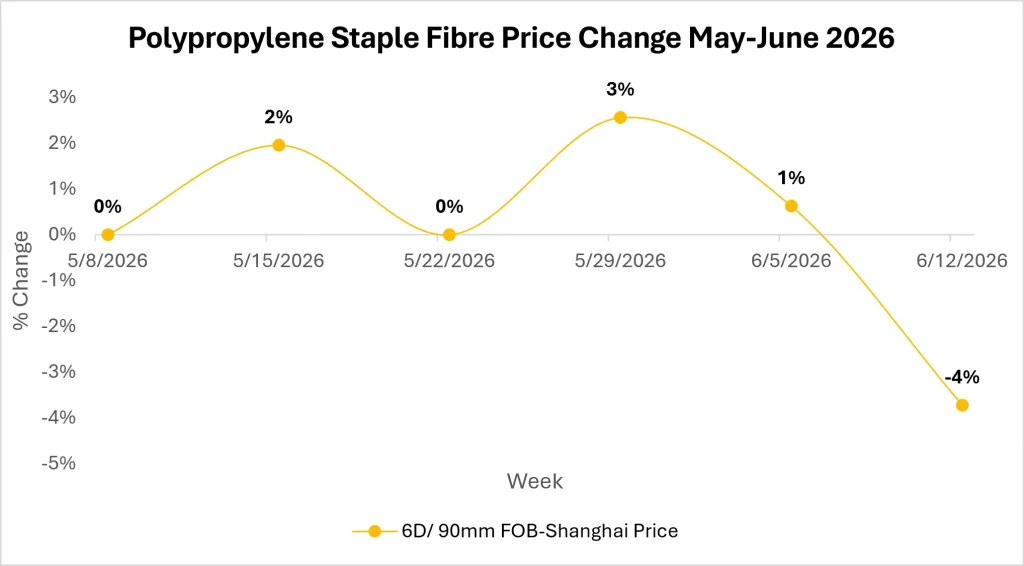
Source: Price Watch™ Polypropylene Staple Fibre Prices
What matters at the value chain level is the gap between feedstock and fibre. PPSF pricing still depends on propylene costs, operating rates, freight, and downstream demand.
When propylene loses steam or inventory pressure builds at the converter level, the fibre side usually gives back gains fast.
- Producers had room to test higher offers in May, but the market did not reward them with sustained orders.
- Downstream buyers stayed selective, so the June correction looked less like panic and more like a demand check.
A fresh angle here is that the market did not need a major supply shock to roll over. It only needed a pause in buying. That is important because it means the next move may depend more on restocking timing than on raw cost support.
China PPSF short term outlook
Over the next one to three months, the near-term risk is a softer or choppy market unless propylene strengthens and converters rebuild stocks. The chart suggests the market is searching for a floor, not a new uptrend.
What would change first, a firmer propylene leg or a real pickup in nonwoven demand, and how fast would buyers react if both turn? Keep that on your Price Watch™ list.
Follow Price Watch™ on LinkedIn for real-time raw material insights, pricing trends, supply chain intelligence, and market updates shaping global commodity markets.