

European recycled polyethylene terephthalate prices are completely breaking away from global benchmarks. While Asian exporters are slashing prices to move inventory, European food grade pellets just registered a steady 2% weekly increase in Hamburg. This decouple shows that regional micro-pressures are heavily outweighing traditional global trade dynamics.
The Energy Disconnect in the Recycling Chain
Traditional polymer markets usually follow standard global supply chains, but right now Europe is operating on an island. The cost of manufacturing R-PET flakes relies heavily on local electricity and gas. Processing units need massive amounts of energy to run material sorting systems, power hot washing plants, and drive heavy crushing machinery.
According to Price Watch™ analysis, escalating tensions in West Asia have severely disrupted regional energy markets. This disruption has sent European utility bills upward. Local recyclers cannot absorb these operational costs, forcing them to push pellet prices up despite a weaker global market.
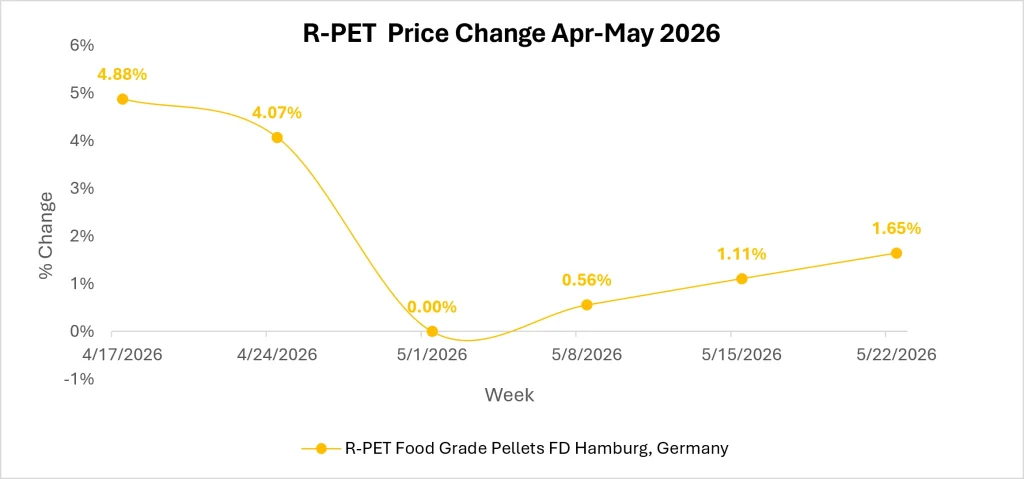
Source: Price Watch™ R-PET Prices
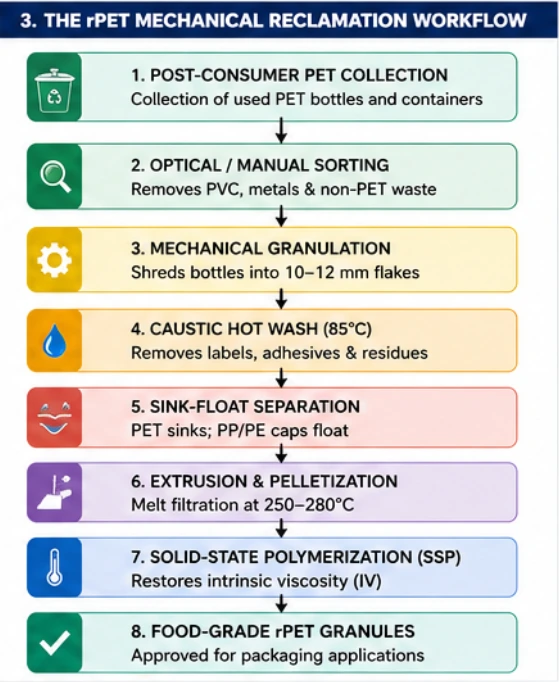
The rPET Mechanical Reclamation Workflow
The processing of post-consumer PET bottles into food-grade rPET granules requires physical, chemical, and thermal purification stages to fulfill strict regulatory safety requirements.
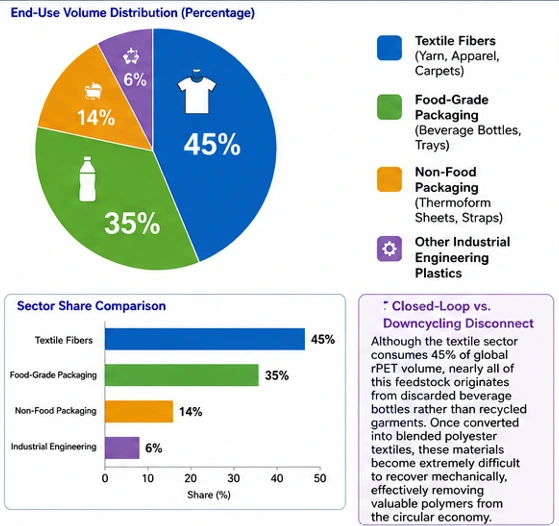
r PET Industry Demand Allocation & Sector Competition
The market is characterized by intense competition for high-quality PET bottle feedstock. Historically, textile producers absorbed the majority of recycled PET volumes. However, beverage and FMCG companies now aggressively secure supply contracts to satisfy recycled-content mandates.
Current End-Use Volume Distribution
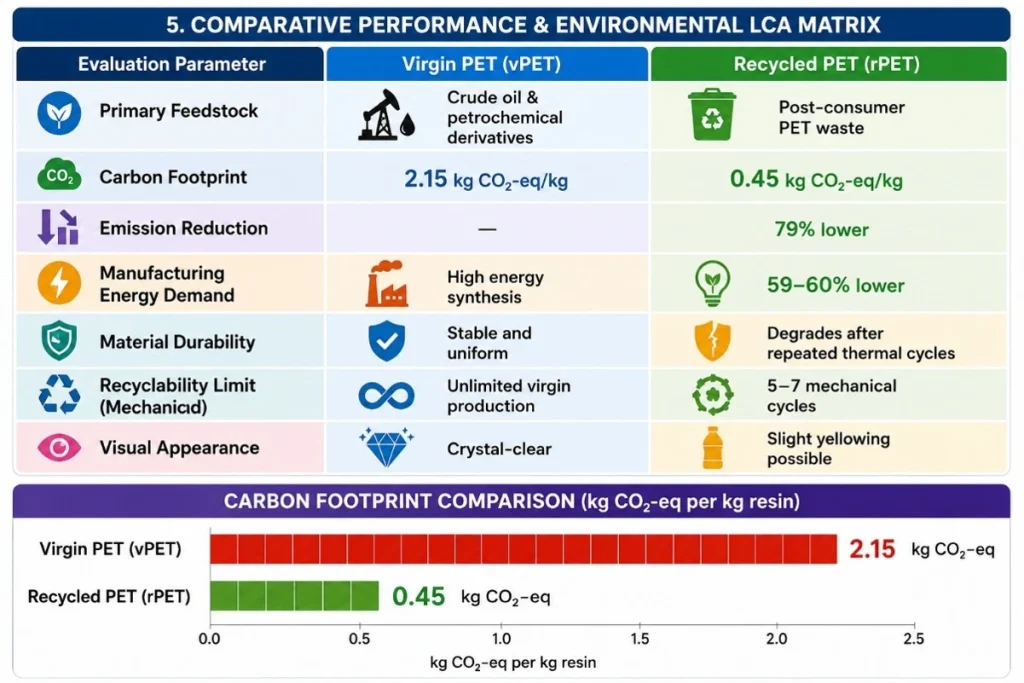
Comparative Performance & Environmental LCA Matrix
Environmental Life Cycle Assessments (LCAS) show that rPET substantially lowers greenhouse gas emissions and energy consumption relative to virgin PET production.
Value-Chain Impacts
As per the latest data monitored by Price Watch™, regional markets are reacting strictly to localized input costs rather than import availability. This creates an immediate operational challenge across the industrial downstream spectrum.
Fast moving consumer goods companies face immediate margin pressure because high local processing costs mean they must pay more for European food grade pellets or risk missing sustainability mandates. Sourcing cheaper Asian flakes is becoming difficult due to high freight costs and strict local quality compliance.
Short-Term R-PET Spot Price Outlook
The European market is entering a period of heightened volatility as elevated domestic supply levels and increasing pressure from weak global polymer trends continue to weigh on pricing sentiment. At the same time, persistent fluctuations in regional energy costs are offsetting some of these bearish market fundamentals.
According to Price Watch™ market intelligence, these opposing dynamics are creating significant uncertainty across the value chain. In the short term, prices are expected to trend downward due to the factors outlined above.
Will European recyclers be forced to cut production if energy spikes continue to outpace consumer willingness to pay for green plastic? For deeper market insights and detailed analysis, subscribe to Price Watch™ today.
Follow Price Watch™ on LinkedIn for real-time raw material insights, pricing trends, supply chain intelligence, and market updates shaping global commodity markets.