

The Indian recycled polyester staple fibre market remained stable for most of July, but the trend shifted sharply in early August.
The decline came after several weeks of almost no movement, suggesting that downstream demand has become more important than raw material support in setting prices.
What Changed in the Indian R PSF Market?
The main pressure appears to be coming from cautious buying by textile and spinning manufacturers. Buyers may be keeping inventories low and purchasing only according to immediate production needs. This limits sellers ability to maintain firm offers, especially when competition remains strong.
At the same time, higher R-PET bottle flake costs are creating a different situation for producers. Instead of allowing these costs to fully pass through to buyers, manufacturers may be accepting lower margins to protect orders.
This can explain why finished R-PSF prices fall even when the recycled feedstock becomes more expensive.
Virgin polyester prices also remain an important factor. When the price gap between virgin and recycled fibre changes, buyers can reconsider their material mix, putting additional pressure on recycled fibre demand.
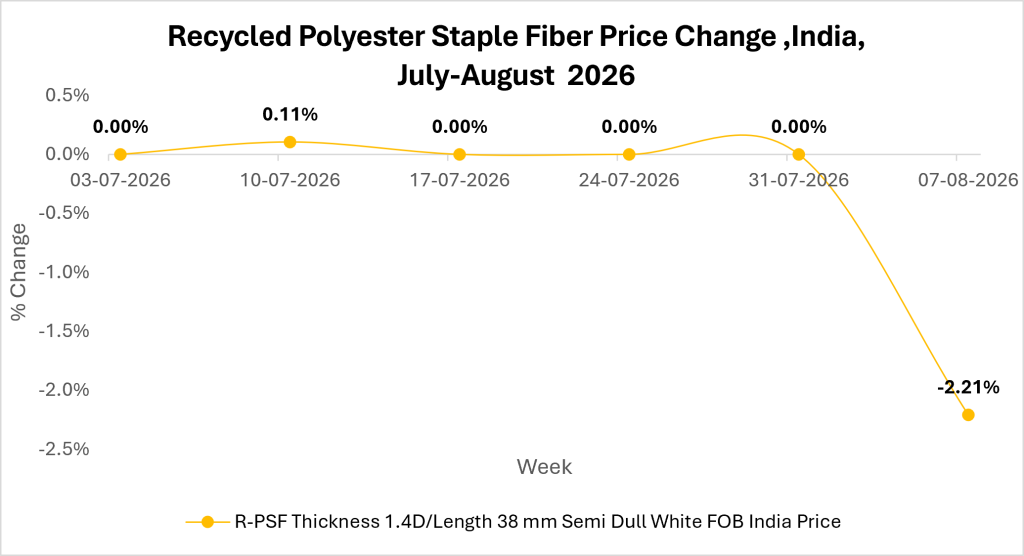
Source: Price Watch™ R-PSF
India R-PSF Market Outlook
In the near term, the market may remain under pressure if textile demand stays weak and buyers continue with limited procurement. Higher R-PET costs could provide some support to production economics, but they may not be enough to push finished fibre prices higher unless downstream orders improve.
The key question is, will higher recycled feedstock costs eventually reach R PSF prices, or will weak textile demand continue to absorb the pressure through lower producer margins?
Follow Price Watch™ on LinkedIn for real-time R-PSF market insights, recycled polyester staple fibre price trends, supply chain intelligence, and global commodity updates.