

Sodium Lauryl Ether Sulfate (SLES) is a widely used anionic surfactant in the personal care and home care industries. It acts as a strong foaming, cleansing, and emulsifying agent in products such as shampoos, body washes, facial cleansers, liquid soaps, and household detergents.
In March and April 2026, the global SLES market witnessed a sharp price increase driven by geopolitical disruptions and rising feedstock costs. However, from May to June 2026, the market shifted into a sustained downward trend across major regions.
At the beginning of 2026, SLES prices remained relatively stable. The escalation of tensions involving Iran and the United States, along with disruptions in the Strait of Hormuz, significantly impacted global supply chains.
Restricted shipping routes led to higher freight charges, longer transit times, and increased logistics costs.
At the same time, key raw materials such as Fatty Alcohols and Ethylene Oxide recorded strong price increases, further raising production costs for SLES manufacturers.
Major producing regions, including China and India, responded by increasing selling prices to offset rising input and transportation expenses.
However, from May 2026 onwards, market fundamentals began to weaken. Easing geopolitical tensions and improving expectations of reopening trade routes through the Strait of Hormuz reduced risk premiums in the market.
Freight rates softened, logistics conditions improved, and feedstock prices started declining, leading to lower production costs across key manufacturing hubs.
China SLES Market Shifts as Feedstock Costs Ease
From May 2026, SLES prices in China showed a continuous downward trend due to improved supply availability and falling feedstock costs. Prices of Fatty Alcohols and Ethylene Oxide declined, easing cost pressure on manufacturers.
At the same time, demand from personal care and household cleaning sectors remained subdued, prompting producers to reduce prices to maintain competitiveness. In June 2026, stabilizing geopolitical conditions and improved logistics further supported a weak but steady decline in prices.
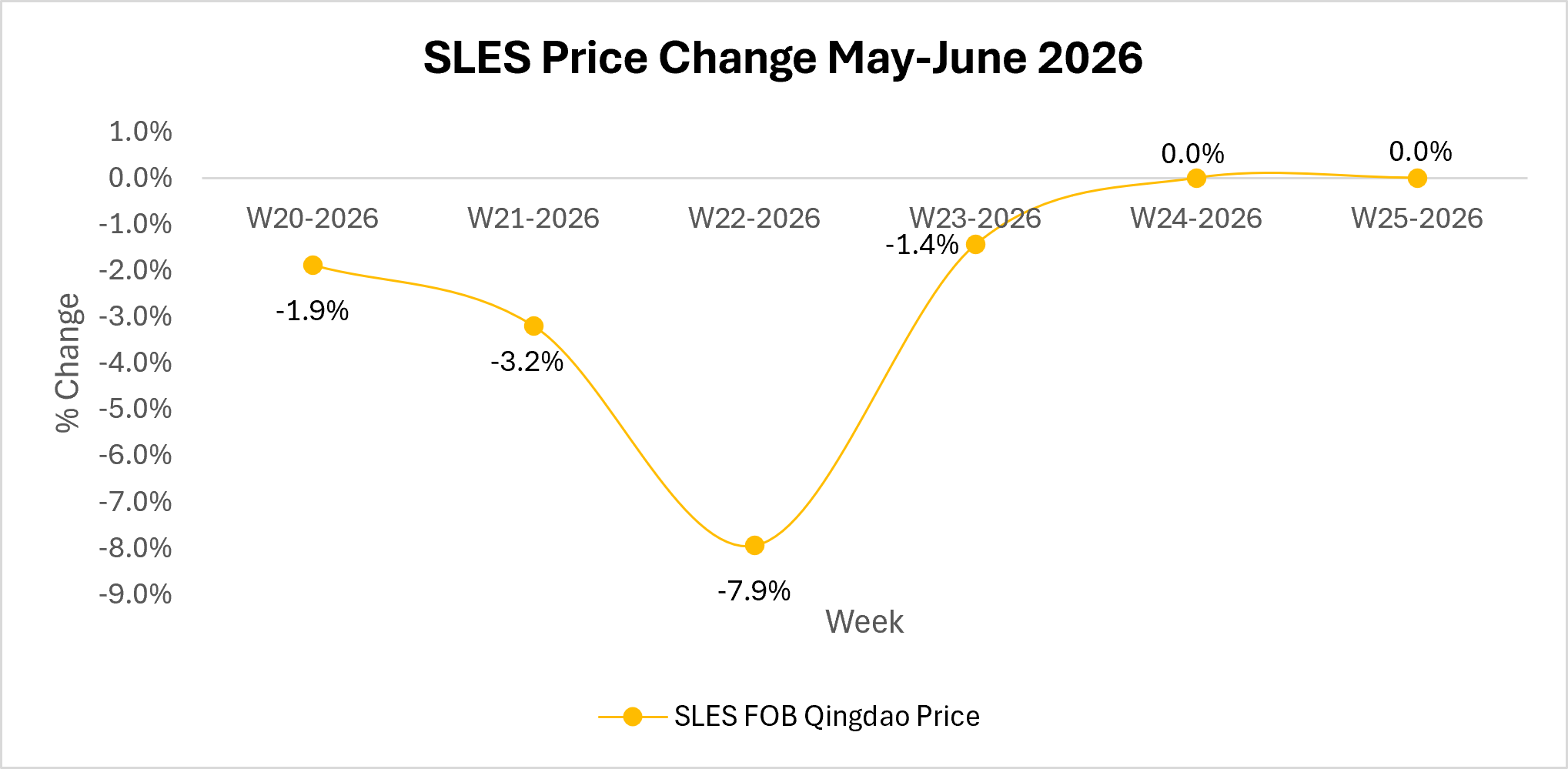
Source: Price Watch™ SLES Prices
India SLES Market Remains More Balanced
In June 2026, SLES prices in India followed a gradual declining trend. Lower prices of Fatty Alcohols and reduced production costs contributed to easing price levels.
However, relatively steady demand from personal care and detergent industries helped prevent a sharp fall. As a result, the Indian market witnessed only a mild decline, with prices largely remaining stable amid balanced supply-demand conditions.
Although SLES prices have softened from the highs observed in March-April 2026, market participants remain cautious. Future price movements will depend on feedstock trends, crude oil direction, geopolitical stability, and demand from downstream personal care and cleaning industries.
SLES Market Outlook
Over the next three months, the market is expected to remain stable to slightly bearish, although any renewed supply chain disruption or rise in raw material costs could quickly reverse the current trend.
As global supply chains continue to react to easing geopolitical tensions and fluctuating feedstock costs, could future movements in SLES prices be driven more by Fatty Alcohol and Ethylene Oxide volatility along with logistics conditions, rather than traditional demand patterns from personal care and home care industries? Stay tuned with Price Watch for the latest market developments and pricing trends.
Follow Price Watch™ on LinkedIn for real-time raw material insights, pricing trends, supply chain intelligence, and market updates shaping global commodity markets.