

Steel rebar prices have continued to decline over the past few weeks, pressured by weak construction demand, slower project activity amid extreme summer heat and the approaching monsoon season, and cautious buying sentiment. Ample supply, comfortable inventory levels, and softer raw material costs have enabled mills to lower offers to stimulate sales, while competitive imports and uncertainty in global steel markets have further weighed on prices.
The decline in key raw material costs, particularly iron ore and steel scrap, has eased production expenses for steelmakers, reducing the urgency to maintain higher finished steel prices. Lower input costs have also intensified competition among mills, with producers offering discounts to secure orders and maintain capacity utilization rates. As a result, buyers have largely remained on the sidelines, anticipating further price corrections in the near term, which has continued to exert downward pressure on rebar prices.
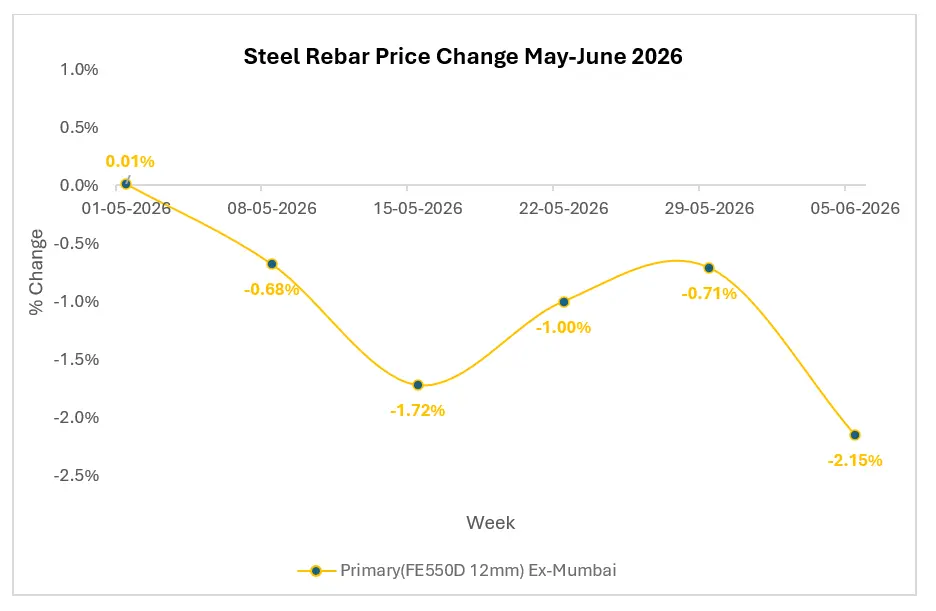
Source: Price-Watch™ | Steel Rebar Prices
Behind the Meltdown: Key Catalysts Fueling Steel Rebar Price Drop
While overarching macroeconomic indicators show that India’s headline steel consumption maintained healthy year-on-year growth, the micro-dynamics governing the long steel and rebar segment ran into a perfect storm of local and international pressures:
- The Pre-Monsoon Structural Slowdown: Infrastructure and construction project activities traditionally scale down execution as the south-west monsoon covers the Indian sub-continent. Knowing that open-air casting and logistics face severe disruption, contractors shifted strictly to hand-to-mouth procurement, drying up wholesale order books.
- The Weight of Surging Imports: Data from the Ministry of Steel confirmed that India maintained its position as a net finished steel importer during the early months of the fiscal year, with imports surging over 60% year-on-year. Cheap steel inflows from global surplus hubs, channeled primarily via Free Trade Agreement (FTA) routes, left domestic primary mills with no choice but to discount their premium product lines to remain competitive.
- Inventory Build-Up at Primary Mills: Domestic crude steel output rose by approximately 2.9% year-on-year to hit 14.21 million tonnes in May. Backed by ongoing brownfield capacity expansions by majors like JSW Steel and Tata Steel, supply remained abundant. Confronting a seasonal demand lull, producers aggressively trimmed prices to prevent warehouse chokepoints.
- Secondary Route Premium Compression: The spread between premium BF-route rebars and cheaper, scrap-based Induction Furnace (IF) rebars became unsustainable in early May. To prevent losing significant regional retail market share to these secondary players, integrated primary mills were forced to squeeze their premiums and lower prices.
Steel Rebar Market Outlook
The steel rebar market is expected to remain cautiously firm over the coming weeks, supported by ongoing infrastructure projects and steady construction activity. Demand from residential and commercial construction sectors is likely to provide a stable consumption base, while relatively balanced inventories may prevent significant price declines.
On the supply side, fluctuations in scrap, iron ore, and energy costs will continue to influence market sentiment. If raw material prices remain elevated and construction demand improves seasonally, rebar prices could see a gradual upward movement.
However, any slowdown in project execution, adverse weather conditions, or weakening economic indicators may limit gains. Overall, the near-term outlook for steel rebar remains moderately bullish with a focus on demand recovery and cost-driven price support.
Follow Price-Watch™ on LinkedIn for real-time raw material insights, pricing trends, supply chain intelligence, and market updates shaping global commodity markets.