Cobalt Oxide Price Trend and Forecast

Weekly Update
|
Historical Data Since 2015
|
Forecast for 2026
  • Commodity Pricing

cobalt oxide Price Trends by Country

beBelgium
nlNetherlands
inIndia

Global cobalt oxide Spot Market Prices, Trend Analysis and Forecast

Cobalt Oxide (Co₃O₄) Price Trend Q3 2025

In Q3 2025, the Cobalt Oxide (min 72% purity) market demonstrated a slightly positive trend across major regions. European hubs like Rotterdam and Antwerp recorded modest upward price movement of 0.18%, reflecting steady industrial demand in battery, ceramics, and chemical applications. Indian imports via CIF Nhava Sheva saw slightly stronger growth of 0.36%, driven by consistent procurement from cathode manufacturers and downstream chemical industries. Stable cobalt feedstock availability and controlled shipping logistics contributed to limited volatility. Overall, the global market remains balanced-to-firm, with marginal price improvements anticipated into Q4 2025 as downstream demand continues at a measured pace.

Netherlands

Domestically Traded Cobalt Oxide price in Netherlands, FD Rotterdam, Grade: (72%) Industrial.

In Q3 2025, Cobalt Oxide prices in the Netherlands showed a modest increase, supported by stable demand from European battery manufacturers and specialty chemical sectors. Steady supply from African and Asian origins, coupled with well-managed inventory levels, prevented sharp price swings. The Cobalt Oxide price trend in the Netherlands reflected controlled market growth, aided by limited volatility in freight and feedstock costs, while European buyers maintained measured procurement aligned with production requirements.

In September 2025, Cobalt Oxide prices in the Netherlands at FD Rotterdam rose by 0.18%, indicating a balanced-to-slightly firm market tone, with incremental improvements expected if downstream demand remains consistent into Q4 2025.

Belgium

Cobalt Oxide Export price from Belgium, FOB Antwerp, Grade: (72%) Industrial.

The price of Cobalt Oxide in Belgium saw modest increases in Q3 2025, which corresponds to more stable offtake from European battery, pigment, and chemical end-users. Export flows from African and Asian sources remained stable, with no additional volatility to the market as supply continued to come through reliably.

The price trend for Cobalt Oxide in Belgium followed Dutch price trend. Logistics and freight conditions continued to be stable and helpful to support a well-controlled market. As of September 2025, Cobalt Oxide prices in Belgium at FOB Antwerp reported an increase of 0.18%, which indicates a stable-to-mildly bullish market tone.

India

CO import price in India from Belgium CIF Nhava Sheva (Belgium), Grade: (72%) Industrial.

In Q3 of 2025, Cobalt Oxide pricing in India experienced a moderate increase as demand remained firm from the pigment, paint, electronics, and specialty chemical sectors. Indian buyers have been active in maintaining steady levels of purchasing in line with production schedules and inventory management. The price trend of Cobalt Oxide in India, at regional level, appeared stable with balanced supply from European and African sourcing channels, with favourable freight and logistics supply keeping pricing in check.

Downstream industries continued to provide domestic demand, supporting positive market sentiment. In September 2025, Cobalt oxide pricing in India rose by 0.36%, indicating mildly bullish market tone, and prices remained expected to move in a slightly positive market sentiment through 2025 Q4, as industrial demand remains steady.

Cobalt Oxide Price Trend Analysis: Q2 2025

In Q2 2025, Cobalt Oxide prices in Belgium surged by 40.27%, marking a sharp reversal from previous quarters. A strong rebound in demand from lithium-ion battery and superalloy sectors especially in response to restocking and regional supply tightening drove up spot prices significantly. The increase also is based upon the export restriction from Cuba of Cobalt ore.

This has significantly hit the Cobalt oxide market in European countries. Also, reduced cobalt hydroxide availability from key African mines and firmer feedstock pricing compounded the bullish sentiment. With logistics constraints re-emerging and European buyers accelerating purchases ahead of further cost inflation, the market shifted rapidly into a firmer, more volatile posture throughout the quarter. 

In Q2 2025, Cobalt Oxide prices rebounded sharply, posting a significant 32.14% quarter-on-quarter increase and breaking the prolonged bearish streak. The turnaround was driven by the export restriction from Cuba of Cobalt ore to Belgium and also renewed procurement from battery materials manufacturers amid signs of recovery in the EV and electronics sectors.

Belgian suppliers experienced tightening inventories due to increased European and Asian demand, constraining export volumes. This coincided with firmer cobalt feedstock prices, prompting aggressive restocking by Indian importers. Reduced spot availability and stronger cost pressures contributed to the sharp upward momentum in pricing. 

In Q1 2025, prices fell by 4.98%, continuing the extended downtrend. Demand from battery materials and high-temperature alloys remained lackluster, with several end-users’ delaying procurement due to oversupply and uncertain order books. While cobalt metal prices showed early signs of recovery, they were not sufficient to lift spot oxide pricing. Supply-side pressure persisted, with regular inflows from African and Asian producers keeping the market long. 

In Q1 2025, Cobalt Oxide prices fell 2.55% quarter-on-quarter as bearish market fundamentals persisted. Demand across battery precursors, pigments, and specialty chemical applications remained weak, with most importers delaying orders amid carryover stocks.

The absence of price volatility in cobalt intermediates and stable export volumes from Belgium sustained a buyer friendly environment. Overall sentiment remained cautious, with limited restocking interest and no apparent supply shocks, keeping CIF India pricing on a soft trajectory. 

Cobalt Oxide Price Trend Analysis: Q4 2024

In Q4 2024, Cobalt Oxide prices in Belgium declined another 4.77%, as weak demand from the pigment and battery sectors persisted through year-end. Buyers reduced purchasing volumes amid budget constraints and a cautious macroeconomic outlook.

While upstream cobalt metal prices stabilized slightly firm logistics and steady European supply prevented any material rebound. Overall, the market tone remained bearish, with sellers forced to offer discounts to move inventory. 

In Q4 2024, Cobalt Oxide recorded a 3.94% quarter-on-quarter decline amid continued year-end demand fatigue. Indian buyers remained conservative, focusing on inventory liquidation rather than fresh procurement, as downstream sectors such as magnets, catalysts, and electronics entered seasonal slowdowns.

Supply-side stability from Belgian exporters and unimpeded port clearances kept availability high, leaving little room for price support. With minimal fluctuations in cobalt metal pricing and no logistic bottlenecks, the market softened further into a low-activity close. 

In Q3 2024, prices dropped sharply by 7.25%, reflecting one of the steepest quarterly contractions of the year. Demand from energy storage, ceramics, and chemical intermediates remained tepid, while sluggish global electric vehicle momentum further eroded offtake.

Falling cobalt metal benchmarks and competitive international offers created a bearish trading environment. Producers faced margin compression but avoided major output cuts, resulting in ongoing oversupply and further price erosion.

In Q3 2024, Cobalt Oxide prices registered a 6.67% decline, the steepest quarterly drop of the year as global cobalt sentiment weakened. Indian importers faced sluggish downstream consumption and high warehouse stock levels, especially from ceramics and hard metal sectors.

European suppliers-maintained export volumes, adding to the supply glut in India. This oversupply, along with static upstream cost cues and soft Chinese demand, continued to suppress pricing power, leading to increased price competition and narrower trade margins. 

In Q2 2024, prices fell a further 3.18%, amid continued weakness in demand from cobalt-based cathode and specialty alloy segments. European buyers remained cautious, and Chinese purchasing interest stayed limited.

Although feedstock costs for cobalt metal showed signs of stabilization, abundant material availability and lackluster order volumes kept pricing under pressure. Market sentiment remained cautious, with only short-term contractual volumes moving consistently. 

In Q2 2024, Cobalt Oxide prices rose further, reflecting a 2.71% quarter-on-quarter drop as weak demand conditions persisted. The battery and pigments industries continued to operate at below-normal utilization levels, while buying interest remained subdued due to lingering concerns over high inventories and soft downstream orders.

With no major changes in European supply flow or raw material costs, market direction stayed muted. Stable CIF logistics and predictable port handling further tilted the balance in favor of buyers, extending the price downtrend. 

In Q1 2024, Cobalt Oxide prices in Belgium declined by 4.10%, as sluggish procurement from the battery and ceramic pigment industries weighed on spot demand. Despite steady operational rates at production sites, softer downstream offtake and high inventory levels pressured prices.

While upstream cobalt metal values remained largely stable, the lack of sustained buying interest and minimal export activity led to a subdued market tone throughout the quarter. 

In Q1 2024, Cobalt Oxide prices declined 4.19% quarter-on-quarter as the market experienced a correction following year-end procurement spikes. The softening trend was influenced by tepid demand from battery materials and ceramics sectors, coupled with consistent overseas shipments that maintained ample availability.

Despite steady upstream cobalt feedstock costs, limited downstream momentum failed to support prices. Buyers remained cautious amid macroeconomic uncertainties, contributing to the bearish sentiment across Indian import channels. 

Technical Specifications of Cobalt Oxide Price Trends

Product Description

Cobalt Oxide (Co₃O₄) is a versatile inorganic compound widely used in industrial and chemical applications. It provides excellent thermal stability, strong chemical resistance, and vibrant pigmentation, making it a reliable and cost-effective choice for ceramics, glass, batteries, and catalysts. Its properties can be tailored through particle size and purity adjustments, offering enhanced performance, color consistency, and durability for applications that demand long-lasting stability and high functional efficiency.

Identifiers and Classification:

  • CAS No – 1308-06-1
  • HS Code – 28220010
  • Molecular Formula – Co₃O₄
  • Molecular Weight (in gm/mol) – 240.80

Cobalt Oxide Synonyms:

  • Cobalt black
  • Cobalto-oxide
  • Cobalt (II, III) oxide
  • Cobaltosic oxide
  • Zaffre

Cobalt Oxide (Co₃O₄) Grades Specific Price Assessment:

  • Cobalt Oxide (72%) Industrial Grade Price Trend

Cobalt Oxide (Co₃O₄) Global Trade and Shipment Terms

*Quotation Terms (Product & Country Specific): 3-5 MT

**Packaging Type (Product & Country Specific): 25 Kg Bag

Incoterms Referenced in Cobalt Oxide Price Reporting

Shipping Term  Location  Definition 
FOB Antwerp  Antwerp, Belgium  Cobalt oxide Export price from Belgium 
CIF Nhava Sheva (Belgium)  Nhava Sheva, India  Cobalt oxide import price in India from Belgium 
FD Rotterdam  Hamburg, Germany  Domestically Traded Cobalt oxide price in the Netherlands 

*Quotation Terms refers to the quantity range specified for the Cobalt Oxide being quoted or offered in a commercial transaction.

**Packaging Type refers to standard packaging size commonly used for Cobalt Oxide packing, ease of handling, transportation, and storage in industrial and commercial applications.

Key Cobalt Oxide (Co₃O₄) Manufacturers and their brands

Manufacturer 
Umicore S.A, Belgium 

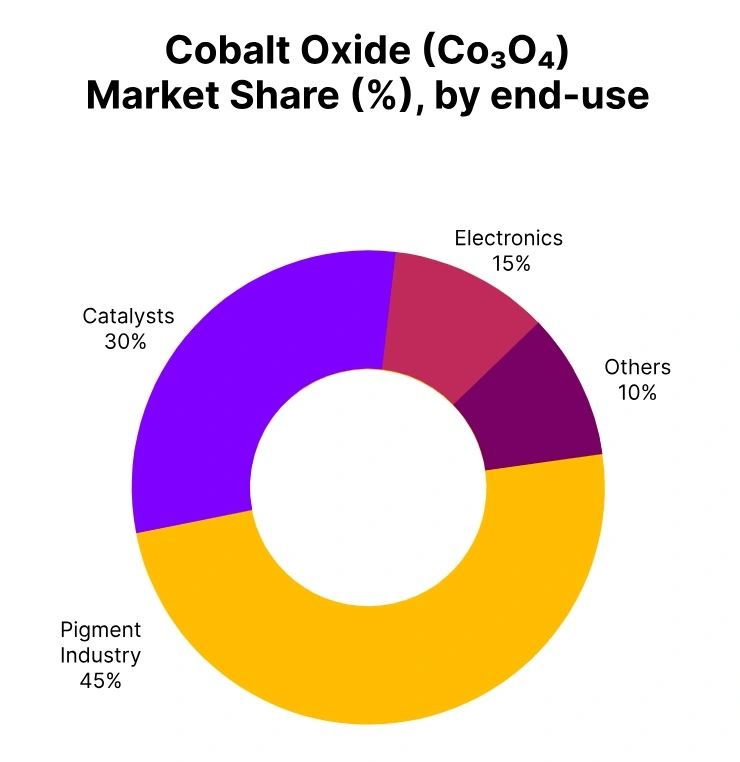
Cobalt Oxide Industrial Applications

cobalt oxide market share end use

Historically, several events have caused significant fluctuations in Cobalt Oxide prices

Geopolitical and Supply Chain Tensions (2024–2025): 

Export restrictions from key cobalt-producing regions such as the Democratic Republic of Congo, as well as ongoing logistical challenges, caused significant supply shocks. Cobalt prices rebounded sharply after hitting a nine-year low, and cobalt oxide pigment blue prices followed this volatility. Downstream buyers, facing high prices and low inventories, delayed purchases, which further tightened the market and contributed to price spikes. 

Strategic Supply Constraints and Quotation Suspensions (2025): 

In 2025, several major cobalt oxide pigment producers suspended spot price quotations and deliberately restricted shipments, prioritizing long-term contract customers. This artificial scarcity, combined with already low inventories in downstream sectors and a resurgence in demand from battery and pigment industries, led to a sharp price increase of 4.5–5%. Transaction volumes dropped by approximately 70%, and negotiation periods lengthened, reflecting heightened market uncertainty and volatility. 

COVID-19 Pandemic (2020): 

The onset of the COVID-19 pandemic led to major disruptions in global supply chains, directly affecting the availability of raw cobalt and the production of cobalt oxide pigments. As key industries such as ceramics, automotive, and pigments slowed due to lockdowns and economic uncertainty, demand for cobalt oxide pigment blue declined, resulting in softer prices. Towards the end of 2020, as global economies began to recover and industries reopened, demand stabilized, and prices began to recover. 

These events highlight the cobalt oxide pigment blue market’s sensitivity to supply-side disruptions, producer strategies, and shifting global demand. The market remains vulnerable to both macroeconomic shocks and targeted actions by major suppliers. 

Why PriceWatch?

PriceWatch is your trusted resource for tracking global cobalt oxide price trends. Our platform delivers real-time data and expert analysis, offering deep insights into the key factors driving price fluctuations in the cobalt oxide market. By monitoring critical events such as geopolitical tensions, supply chain disruptions, and economic shifts, PriceWatch keeps you fully informed of market dynamics.

In addition, PriceWatch provides detailed forecasts and updates on production capacities, enabling you to anticipate market changes and make well-informed decisions. With PriceWatch, you gain a competitive edge in understanding all the elements that influence cobalt oxide prices worldwide. Stay ahead of the curve with PriceWatch’s reliable, accurate, and timely cobalt oxide market data.

Track PriceWatch's cobalt oxide price assessment on a weekly basis since 2015 onwards, along with short-term forecasts, and get access to the detailed report in a downloadable format.

Data Collection and Sources​

PriceWatch aggregates real-time pricing data from commodity exchanges, industry reports, and proprietary databases. It also gathers on-the-ground intelligence from producers, suppliers, traders, and end-users in major cobalt oxide pigment production hubs. The platform closely monitors the entire supply chain, including feedstock prices, production capacities, and logistics. 

Event Tracking and Impact Analysis​

The team continuously tracks global events, such as export bans, producer suspensions, geopolitical conflicts, and natural disasters, that may impact cobalt oxide pigment blue supply and pricing. Each event’s immediate and long-term effects on pricing are thoroughly analyzed, including shifts in transaction volumes and inventory levels. 

Production Capacity and Supply Analysis

PriceWatch maintains a comprehensive database of global cobalt oxide pigment production facilities, tracking operational status, maintenance schedules, and output levels. The platform provides detailed forecasts of upcoming production capacities, factoring in new plant constructions, expansions, and technological advancements to predict future supply trends. 

Demand Forecasting

The platform delivers in-depth analysis of demand trends across key sectors such as pigments, ceramics, batteries, and automotive. It tracks year-on-year demand growth and projects future consumption patterns based on economic indicators and industry developments, while also considering regional demand variations and regulatory impacts. 

Pricing Model Development

PriceWatch utilizes advanced econometric models to forecast cobalt oxide pigment blue prices, incorporating real-time data, historical trends, and projected market conditions. Scenario-based assessments are conducted to evaluate potential future market conditions, including best-case, worst-case, and most-likely scenarios. 

Reporting and Client Support

Clients receive comprehensive reports featuring current price assessments, future price forecasts, and in-depth analysis of market drivers. PriceWatch offers continuous updates and personalized support, ensuring clients have the most up-to-date information to make informed decisions. Experts are available to discuss specific market developments and provide tailored advice. 

This robust research methodology ensures that Price-Watch delivers the most accurate, timely, and actionable cobalt oxide pigment blue pricing assessments, helping clients stay ahead of market trends and make informed business decisions. 

Cobalt Oxide Market Price Trend provided by PriceWatch is a base price and excludes VAT/Taxes, discounts, or offers. The information herein is accurate to the best of our knowledge as of the date indicated and is provided solely for the convenience of our customers as a reference for cobalt oxide. PriceWatch disclaims any warranties or representations regarding the accuracy of results derived from this information. It is the sole responsibility of the user to assess the suitability of the product for their specific application. This document does not constitute an endorsement to use the product in violation of any applicable patent rights.

Cobalt oxide pricing is influenced by a combination of technical, geographic, and economic factors. Purity and color strength are critical—high-purity pigment with intense, uniform color commands a premium, especially for demanding applications like ceramics, glass, and high-performance coatings. Particle size distribution and dispersibility also impact pricing, as finer, more consistent pigments are preferred for specialty uses. Geographic factors play a role, with proximity to cobalt mining and processing centers affecting supply and cost. Market demand is closely linked to trends in ceramics, automotive, and electronics, while fluctuations in raw cobalt prices and global supply chain dynamics add additional volatility. Broader economic conditions, including exchange rates, inflation, and trade policy, further shape the pricing landscape for this specialty pigment.

To negotiate effectively, start by researching current market trends and price benchmarks to establish a strong foundation. Leverage your purchase volume—larger or recurring orders can often secure better pricing. Consider sourcing from multiple suppliers to increase your bargaining power and mitigate supply risks. Long-term contracts may offer price stability and potential discounts, while negotiating favorable payment terms can enhance your cash flow. Evaluate supplier reliability, including product quality, consistency, and delivery performance, to ensure value is beyond just the price. Building a transparent, long-term relationship with your supplier can also facilitate better terms and responsiveness to market changes.

The cobalt oxide market is evolving rapidly, with several trends likely to impact future pricing. Growing demand from the ceramics, glass, and high-end coatings sectors is expected to support price growth, especially as architectural and automotive applications expand. The global shift toward electric vehicles and energy storage is increasing competition for cobalt resources, which could tighten supply and raise costs for pigment producers. Technological advancements in pigment production may improve efficiency and color performance, potentially influencing price dynamics. However, environmental regulations and responsible sourcing initiatives are likely to increase compliance costs, contributing to upward price pressure. Market competition and the emergence of alternative blue pigments may offer some balance, but overall, the market is expected to remain sensitive to both supply-side and demand-side developments.