Propylene Carbonate Price Trend and Forecast

UNSPC code: 12352003
|
Weekly Update
|
Historical Data Since 2015
|
Forecast for 2026

propylene carbonate Price Trends by Country

cnChina
vnVietnam
trTurkey
inIndia

Global propylene carbonate Spot Market Prices, Trend Analysis and Forecast

Price Watch™provides real-time price assessments and price forecasts for Propylene carbonate across top trading regions: 

Propylene Carbonate Regional Coverage Propylene Carbonate Grade and Country Coverage Propylene Carbonate Pricing Data Coverage Explanation
Asia Propylene Carbonate Pricing Analysis Propylene Carbonate TG (99% min) FOB Prices at Shanghai port, China Weekly Price Update on Propylene Carbonate Real-Time Export Prices from Shanghai port, China to Global Markets
Propylene Carbonate TG (99% min) Prices at Haiphong port, Vietnam, Importing from China Weekly Price Update on Propylene Carbonate Real-Time Import Prices at Haiphong port, Vietnam from China
Propylene Carbonate TG (99% min) CIF Prices at Nhava Sheva port, India, Importing from China Weekly Price Update on Propylene Carbonate Real-Time Import Prices from Nhava Sheva port, India from China
Propylene Carbonate TG (99% min) Ex-Mumbai Domestic Prices, India Real-Time Weekly Price Update of Propylene Carbonate Domestic Prices in Mumbai, India
Europe Propylene Carbonate Pricing Analysis Propylene Carbonate TG (99% min) CIF Prices at Mersin port, Turkey, Importing from China Weekly Price Update on Propylene Carbonate Real-Time Import Prices from Mersin port, Turkey from China

 Note: In assessments structured as CIF [Importing Port] (Exporting Country), the country mentioned in brackets indicates the primary origin of supply (exporting country), while the named port refers to the destination port in the importing country. Other Incoterms (FOB, FD, EXW, etc.) should be interpreted in accordance with standard international trade definitions.

Propylene Carbonate Price Trend Q1 2026

During the first quarter of 2026, there are considerable gains observed in the Propylene Carbonate (PC) market in China, Turkey, India, and Vietnam. The prices of Propylene Carbonate fluctuate by a percentage increase of 2% to 40%. These price changes occurred due to stable demand from various industries that use Propylene Carbonate in the manufacturing process of solvents, cleaners, and industries.

In addition, China’s role in exportations and steady supply in the PC industry ensured the stability of the prices. Although there are difficulties concerning the availability of the raw material, the PC production remained constant, adding to market stability.

China: Propylene Carbonate Export price from FOB Shanghai, China, Technical Grade 99% min Purity Grade

The Propylene Carbonate price in China in Q1 2026 has witnessed price fluctuation range of -9% and +40%. The Propylene Carbonate price trend in China has been affected by modest demand coming from various industrial applications along with stable supplies to the region.

The vast range of prices has been linked to variability in cargo volumes and changes in purchasing practices, indicating the volatile nature of the market amid steady demand trends. In China, Propylene Carbonate prices in March 2026 have increased by 40% against the prices in February due to decreased supply.

The Propylene Carbonate price trend in China has been negatively affected by the disruption in the supply chain, especially due to growing tensions in the region.

Turkey: Propylene Carbonate imported price from Grade CIF Mersin (China), Turkey, Technical Grade 99% min Purity Grade

The Propylene Carbonate price trend in Turkey in Q1 2026 have experienced a variation noted between -8% and +30%. Trends in the Propylene Carbonate price in Turkey have been driven by high levels of demand in all end-user industries amid favorable supply dynamics in the region due to imports from China.

Cargo availability changes and procurement shifts have been responsible for price fluctuations. In Turkey, Propylene Carbonate prices in March 2026 have increased by 30% when compared to February due to supply problems.

Trends in Propylene Carbonate prices in Turkey have been strongly affected by disruptions along the supply chain, in addition to geopolitical concerns that have restricted supply availability in the region.

Vietnam: Propylene Carbonate imported price from Grade CIF Haiphong (China), Vietnam, Technical Grade 99% min Purity Grade

According to Price-Watch™, in Q1 2026, Propylene Carbonate prices in Vietnam fluctuations between -14% and +28%. The Propylene Carbonate price trend in Vietnam is influenced by moderate demand from key sectors, alongside stable supply conditions. The price fluctuations reflected changes in cargo availability and varying purchasing behavior.

In Vietnam, Propylene Carbonate prices in March 2026 the markets showed steady growth throughout the quarter, with a notable price increase in March 2026, rising by 28%. This increase is attributed to disruptions in supply chains, likely worsened by geopolitical tensions, leading to tighter regional availability and causing temporary supply shortages.

Throughout the quarter, production rates remained stable, while consumption continued at a steady pace in key sectors. The broader market exhibited supply-driven volatility, with significant price movements reflecting the dynamics of the Propylene Carbonate market in Vietnam.

India: Propylene Carbonate imported price from Grade CIF Nhava Sheva (China), India, Technical Grade 99% min Purity Grade

India: Propylene Carbonate Domestically Traded price in Mumbai, India, Technical Grade 99% min Purity Grade

India’s Propylene Carbonate prices skyrocketed in the first quarter of 2026, with CIF prices increasing 41%, while Ex-Mumbai prices saw a 10% jump. India Propylene Carbonate prices tracked a very strong upward trend, with CIF prices increasing sharply mirroring in the Ex-Mumbai prices over the same time period.

Driving this increase has been a combination of increasing demand for industry-based Propylene Carbonate end-use goods, continuing degradation of supply chain/ logistical efficiencies, and continued inflationary pressure on costs for transportation/logistics.

At the same time, Propylene Carbonate struggled to meet expectations in significantly deteriorating conditions on the global supply chain, as a result of port delays, supply chain backlogs and weak currencies continuing to inflate import costs into India.

In addition, Propylene Carbonate pricing in March 2026 has increased sharply with supply chain and logistical challenges. As supply chain conditions move toward stabilization (and production capacity increases), Propylene Carbonate pricing should begin to transition downward within the next quarter, but significant underlying demand combined with the potential for supply chain disruptions may likely support continued upward movement in pricing.

Propylene Carbonate Price Trend Analysis: Q4 2025

During the fourth quarter of 2025, there has been a mild upward move within the market prices for Propylene Carbonate (PC) in China, Turkey, India, and Vietnam. The prices of PC fluctuated between USD 750 and USD 950 per metric ton, with price changes of between +1% and +7%.

The positive shift in the price is backed by continuous demand from the major end-user industries of solvents, cleaners, and industrial sectors. In addition, the market exhibited favorable supply trends, as it is evident that supply levels are consistent throughout the quarter in China, which is an exporter of the product. Production rates are relatively constant amid minor difficulties with feedstock supply.

China: Propylene Carbonate Export price from FOB Shanghai, China, Technical Grade 99% min Purity Grade

The Propylene Carbonate price in China experienced price changes from -5% to +4%. The Propylene Carbonate price trend in China is mainly shaped by modest demand from industries as well as constant supplies within the region.

Price variations have been witnessed due to cargo availability and buyers’ behavior changes, thus suggesting occasional fluctuations in a well-balanced market structure.

In China, Propylene Carbonate price in December 2025 rose by 1.7% from November due to supply chain modifications and shifting demands. The Propylene Carbonate price trend in China has shown controlled production and consumption volumes within certain industries.

Turkey: Propylene Carbonate imported price from Grade CIF Mersin (China), Turkey, Technical Grade 99% min Purity Grade

The Propylene Carbonate price in Turkey noted price change in a range of -1% to +4%. The Propylene Carbonate price trend in Turkey has been impacted due to constant demand for the product as well as steady supply conditions owing to import from China.

Changes in the availability of shipments and procurement patterns have caused variations in prices. In Turkey, Propylene Carbonate price in December 2025 have risen by 0.3% from the previous month of November, supported by steady supply conditions coupled with increased demand.

Vietnam: Propylene Carbonate imported price from Grade CIF Haiphong (China), Vietnam, Technical Grade 99% min Purity Grade

According to Price-Watch™, in Q4 2025, Propylene Carbonate prices in Vietnam, imported from China, have witnessed price fluctuations between -3% and +7%. The Propylene Carbonate price trend in Vietnam is influenced by steady demand from key sectors, alongside stable supply conditions.

The fluctuations in price reflected varying cargo availability and shifts in purchasing behavior. In Vietnam, Propylene Carbonate prices in December 2025 steady growth throughout the quarter, with a significant price increase, rising by 4.3%.

This increase is driven by moderate supply chain adjustments and improved demand. Production rates remained stable, and consumption grew at a steady pace. The broader market exhibited supply-driven volatility, with price movements reflecting the dynamics of the Propylene Carbonate market in Vietnam.

India: Propylene Carbonate imported price from Grade CIF Nhava Sheva (China), India, Technical Grade 99% min Purity Grade

India: Propylene Carbonate Domestically Traded price in Mumbai, India, Technical Grade 99% min Purity Grade

In Q4 2025, the Propylene Carbonate price in India, particularly at Ex-Mumbai, has witnessed marginal changes during the quarter. The Propylene Carbonate price trend in India showed a moderate decline followed by stabilization, with CIF prices decreasing by -5% to +3%, and Ex-Mumbai prices fluctuating between -2% and +1%.

A slight price increase of 1.7% occurred in December for CIF prices, while Ex-Mumbai prices saw a modest rise of 0.8%. In India, Propylene Carbonate price in December 2025 price fluctuations is driven by fluctuating demand across key sectors and ongoing supply chain adjustments.

The Indian market faced challenges due to slower-than-expected international shipments and occasional port congestion, which added pressure to import costs. While the global Propylene Carbonate market remained relatively stable, regional supply chain disruptions contributed to the price movements.

As supply chains gradually stabilize and production capacity improves, the price of Propylene Carbonate in India may experience moderation in the coming quarter. However, demand-side dynamics and potential disruptions could continue to influence prices.

The global propylene carbonate market demonstrated moderate stability in Q3 2025, with some regional variation. The Propylene Carbonate price trend fluctuated by 0.1-1.0% during the July-September 2025 quarter, driven by consistent feedstocks, energy prices, and supply chain costs at the regional level.

Although some upstream price fluctuations took place, solid demand from lithium-ion batteries, coatings, and pharmaceuticals held prices relatively steady. Continued expansion of production capacity and supply chain normalization should also help maintain pricing stability for propylene carbonate in the upcoming quarter.

China: Propylene Carbonate price FOB Shanghai, China, Purity: ~99%.

During the third quarter of 2025, the price of Propylene Carbonate in China experienced a modest decrease of 0.3%. Propylene Carbonate Price trend in China remained weak, with the market experiencing tentative stability after months of declining prices. Seasonal restocking enabled moderate buying, particularly from downstream customers in electronics and energy storage, as supply chains adapted for post-summer activity.

Exports to Southeast Asia improved slightly due to improvement in shipping conditions and steady trade lanes, which gave Chinese producers some support. Feedstock costs for propylene oxide remained stable, while crude oil benchmarks experienced price variability, but did not materially impact costs.

Overall demand in both domestic and export markets remained limited, as the trend of cautious buying practices continued during the summer months. Buyers were focused on short-term purchases without committing to long-term contracts, while general market sentiment appeared weak. In September 2025, propylene carbonate prices in China decreased 2.37% to 740 USD/ton.

Vietnam: Propylene Carbonate price FOB Haiphong, Vietnam, Purity: ~99%.

In the third quarter of 2025, Propylene Carbonate price in Vietnam decreased slightly by 0.2%. Propylene Carbonate price trend in Vietnam indicates a tentative phase of stabilization, as the market is dependent on imports from China. Some seasonal improvement in industrial activity took place after the monsoon season, which allowed for some marginal restocking, particularly in the electronics and lithium-ion battery sectors.

There was also some modest recovery in demand from the coatings sector, although overall demand for coatings continued to be dampened by widespread caution on industrial activity. Exports from China remained stable with FOB levels holding steady, backed by stable feedstock propylene oxide values. Shipping conditions across Southeast Asia were also better, resulting in fewer logistical bottlenecks and smoother trade flows into Vietnam.

Despite the positive factors in Vietnam, procurement continued to be tentative as buyers avoided pursuing aggressive forward purchasing strategies given the uncertainties globally. Buyers had a comfortable amount of supply available, which limited any significant upward momentum, keeping the propylene carbonate market either in equilibrium or controlled balance.

In general, the third quarter was a period of stability, and demand improved, leading to a cautiously optimistic outlook, balanced by the fragile sentiment and pace that ultimately dampened recovery. In Vietnam, the price of Propylene Carbonate in September 2025 decreased by 4.66% to 778USD/ton.

Turkey: Propylene Carbonate price FOB Mersin, Turkey, Purity: ~99%.

During the third quarter of 2025, Propylene Carbonate prices in Turkey were down by 0.74%. The Propylene Carbonate price trend in Turkey captures tentative stabilization, but the momentum remains weak. The resumption of industrial activity post-summer has featured some mild restocking, as downstream buyers have moved some volumes, particularly in coatings and electronics, that provided support, but only briefly.

We have observed steady imports from China, with firm import values reflected in FOB prices that were modestly firm, largely reflective of feedstock propylene oxide price stability. However, the lack of demand has limited any significant recovery in purchasing activity, and cautious buying patterns have remained a consistent feature of the marketplace.

Global economic uncertainty, and Turkey’s domestic inflationary environment, kept buyers selective and limiting them to committing to short-term volumes in the marketplace rather than entering new forward contracts.

Freight conditions have remained in reasonable balance ensuring supply security, but with little influence on price dynamics. As a result, Q3 reflected a period of relative stability, improved restocking offsetting previous declines, but being unable to gain much on the demand side creating significant upward pressure. Propylene Carbonate prices in Turkey were reported down in December 2025 at 5.49% at 861 USD/ton.

India: Propylene Carbonate price CIF Nhava Sheva, Mumbai, India, Purity: ~99%z.

According to Price-Watch, in the third quarter of 2025, Propylene Carbonate prices in India dropped by 0.39%, with this slight reduction being reported at CIF Nhava Sheva. Propylene Carbonate Price trend from India reflected some stabilization, driven by Chinese imports, and modest restocking from post-monsoon activity in the industry due to consistent demand in electronics and lithium-ion batteries.

The coatings and adhesives sector experienced slight normalization or recovery but still remained somewhat constrained. FOB China prices also remained steady, with feedstock prices for propylene oxide holding static and fluctuations in crude oil being intermittent. On the Indian buying side, the pattern of short-term sourcing from Chinese suppliers was preferred to keep from being overly committed in an uncertain global situation.

For Ex-Mumbai, the Propylene Carbonate price also fell a little larger at 0.51%. This market also experienced some moderate degree of stabilization led by seasonal restocking with industrial and chemical players returning to the market post-monsoon.

Feedstock prices for propylene oxide were flat, with little influence or distraction from crude oil pricing benchmarks. Domestic producers did a very good job of controlling production levels to align with market demand to avoid any over-supply situation. In September 2025, Propylene Carbonate prices in India fell by 0.11% (CIF) to 72,335 INR/ton and 1.82% (Ex-Mumbai) to 80,250 INR/ton.

According to the PriceWatch, Propylene Carbonate prices declined to 737 USD per MT in China, marking a 2.12 % drop from Q1. The Propylene Carbonate Price Trend shifted slightly bearishly due to weaker sentiment in battery chemicals and coatings demand. The Propylene Carbonate Market in India softened as battery material buyers delayed procurement. Vietnam reported reduced offtake due to seasonal slowdowns in manufacturing activity.

Türkiye saw minor drops in imports as domestic inventory levels remained high. Propylene Carbonate prices faced downward pressure from sluggish inquiries. The Propylene Carbonate price index dipped slightly with fewer bulk orders seen from traditional buyers. The Propylene Carbonate Price Chart reflected consistent price erosion through late April and May.

Feedstock propylene oxide remained adequately available, offering producers flexibility. Chinese exporters adjusted quotes to maintain volume amid regional demand weakening. Overall, Q2 marked a price correction driven by seasonal demand softening and slower downstream performance in major importing countries. 

In Q2 2025, according to PriceWatch, Propylene Carbonate prices in India fell to 68,110 INR per MT on a CIF basis, reflecting a 5.87 % decline from Q1. Ex-Mumbai prices also dropped to 86,175 INR per MT, showing a 4.80 % quarter-on-quarter dip. The decline was largely attributed to seasonally weaker demand during monsoon, particularly from the coating and battery electrolyte sectors. Chinese suppliers reduced FOB offers to maintain competitiveness, reflecting lower regional offtake.

Inventory levels in India remained sufficient due to earlier stockpiling, which softened new imports. Mumbai-based distributors reported slower movement due to logistical delays caused by heavy rainfall. Feedstock prices in China stayed relatively flat, but a dip in procurement from Vietnam and Türkiye added bearish pressure to the export market.

Indian buyers adopted a cautious approach, aligning purchases with actual consumption rather than forecasts. Overall, Q2 showed a price correction phase shaped by monsoon-related seasonality and lower industrial activity.

During Q1 2025, the international Propylene Carbonate market saw a significant downturn across all regions. China FOB prices dropped to $757/MT, reflecting a sharp 10.63% decrease compared to Q4 2024. The decline was driven by weaker demand from key end-use industries such as coatings and battery manufacturing, compounded by excess supply in the market.

Similarly, CIF Vietnam prices fell by 10.32%, reaching $808/MT, as regional markets faced subdued industrial activity and cautious purchasing from downstream sectors. CIF Türkiye prices also decreased by 8.02%, to $940/MT, influenced by slower demand from the automotive and electronics industries. Overall, the market sentiment remained negative, with buyers hesitating to commit to large purchases due to uncertainty in the economic outlook. 

In Q1 2025, the Indian Propylene Carbonate market faced a clear downward trend. CIF India prices dropped sharply to INR 72,360/MT, registering a -7.46% decrease from the previous quarter. The decline was mainly due to weak post-festive industrial demand and oversupply in the market, especially from China, where export availability remained strong.

Indian buyers were conservative with procurement, relying on previously built-up inventories. Ex-Mumbai prices also declined, settling at INR 90,521/MT, down -2.71%, as distributors lowered prices to clear stock amidst low offtakes. 

Propylene Carbonate Price Trend Analysis: Q4 2024

In Q4 2024, the market exhibited a modest decline, with China FOB prices falling to $847/MT, a 0.82% decrease compared to Q3 2024. CIF Vietnam prices dropped by 3.94%, to $901/MT, as regional demand weakened further, particularly in the automotive and coatings sectors.

On the other hand, CIF Turkey saw a significant drop of 5.02%, with prices reaching $1022/MT, as the Turkish market faced higher inventory levels and slower off-take, despite some resilience in other regional sectors. The market was under pressure from both weaker demand and continued logistical challenges, affecting price stability. 

In Q4 2024, the market saw limited price movement but began to soften. CIF prices edged up slightly to INR 78,191/MT, reflecting a 0.33% increase from Q3. While the Indian festive season boosted demand in sectors like coatings and packaging, overall purchase volumes were cautious due to comfortable inventory levels.

Freight rates remained stable, and imports from China continued without disruption. Meanwhile, Ex-Mumbai prices fell to INR 93,041/MT, marking a -3.25% dip, as sellers adjusted to match muted end-user demand despite the festive backdrop. 

During Q3 2024, China FOB prices were quoted at $854/MT, marking a 3.06% decrease from Q2 2024. CIF Vietnam prices decreased by 1.47%, to $938/MT, reflecting a slowdown in local manufacturing activity and a reduction in restocking efforts.

CIF Turkey prices rose modestly by 2.28%, reaching $1076/MT, supported by steady demand from specific industrial applications, particularly in the chemical and automotive sectors. Despite the slight improvement in Turkey, the overall market remained under pressure due to rising costs and logistical delays. 

In Q3 2024, the market stabilized with minimal fluctuation. CIF India prices dipped to INR 77,931/MT, a -0.98% decrease over Q2. The monsoon season led to slower activity in the construction and coatings industries, which softened demand.

Meanwhile, there were no major constraints in supply from China, keeping availability steady. Ex-Mumbai prices remained nearly flat at INR 96,166/MT, reflecting a 0.87% increase, likely supported by steady local distribution and some delayed demand from earlier quarters. 

In Q2 2024, the market saw a slight price recovery after the Q1 downturn. China FOB prices increased to $881/MT, reflecting a 2.32% rise compared to Q1 2024, as downstream demand stabilized, particularly in the electronics and coatings industries. CIF Vietnam prices rose by 2.92%, reaching $952/MT, bolstered by restocking activity in Southeast Asia and improved industrial activity. CIF Turkey prices rose by 3.75%, reaching $1052/MT, supported by strong demand from the automotive and chemical sectors. The market appeared to show signs of stabilization as demand in key industries helped offset some of the earlier downturns. 

In Q2 2024, Propylene Carbonate prices saw a modest rise. CIF prices increased to INR 78,701/MT, showing a 3.41% gain from Q1. This was driven by restocking across key end-user industries, including electronics, automotive chemicals, and cleaning formulations.

Some firmness in Chinese domestic demand also reduced export supply, supporting higher prices. On the domestic front, Ex-Mumbai prices rose to INR 95,333/MT, up 3.25%, as traders passed on higher import costs and responded to slightly stronger buyer interest. 

During Q1 2024, the Propylene Carbonate market saw a relatively weaker start to the year. China FOB prices were recorded at $861/MT, reflecting a 5.18% decrease from the previous quarter. CIF Vietnam prices also declined by 0.64%, to $925/MT, influenced by slower manufacturing activity and cautious buying behavior in the region.

In contrast, CIF Turkey prices increased by 5.30%, reaching $1014/MT, due to continued demand from the automotive and coatings sectors, which helped cushion the overall decline. The market remained relatively stable in Turkey, while other regions faced challenges stemming from softer industrial demand and logistical constraints. 

In Q1 2024, the market started off slightly bearish. CIF India prices dropped to INR 76,105/MT, showing a -1.55% decline from Q4 2023. Demand remained slow across industrial sectors following the New Year break, and Chinese suppliers maintained steady export flows despite minor port disruptions during Lunar New Year.

As a result, the Indian market remained well-stocked. Ex-Mumbai prices mirrored this softness, falling to INR 92,333/MT, down -4.11%, as local players avoided aggressive purchasing in a subdued demand environment. 

Technical Specifications of Propylene Carbonate Price Trends

Product Description

Propylene Carbonate is a versatile, colourless, and odourless liquid with a high polarity, making it an effective solvent in a wide range of industrial applications. It is commonly used as a solvent in paints, coatings, and adhesives due to its ability to dissolve both organic and inorganic compounds. In the electronics and automotive industries, Propylene Carbonate is used in the production of lithium-ion batteries and supercapacitors as a key component of electrolyte solutions. Additionally, it serves as a solvent in the production of pharmaceuticals, cosmetics, and cleaning agents. Propylene Carbonate is an eco-friendly alternative to more hazardous solvents, making it a preferred choice for environmentally conscious formulations.

Identifiers and Classification:

  • CAS No: 108-32-7
  • HS Code: 29329900
  • Molecular Formula: C4H6O3
  • Molecular Weight [g/mol]: 102.09


Propylene Carbonate Synonyms:

  • 1,2-Propylene Carbonate


Propylene Carbonate Grades Specific Price Assessment:

  • Purity: 99% min Grade Price Trend


Propylene Carbonate Global Trade and Shipment Terms

  • Quotation Terms (Product & Country Specific): 25-28 MT
  • Packaging Type (Product & Country Specific): 250 kg Drum


Incoterms Referenced in Propylene Carbonate Price Reporting

Shipping Term  Location  Definition 
FOB Shanghai  Shanghai, China  Propylene Carbonate Export price from China 
CIF Haiphong (China)  Haiphong, Vietnam  Propylene Carbonate import price in Vietnam from China 
CIF Mersin (China)  Mersin, Turkey  Propylene Carbonate import price in Turkey from China 
CIF Nhava Sheva (China)  Nhava Sheva, India  Propylene Carbonate import price in India from China 
Ex-Mumbai  Mumbai, India  Domestically Traded Propylene Carbonate price in Mumbai 

*Quotation Terms refers to the quantity range specified for the Propylene Carbonate being quoted or offered in a commercial transaction.

**Packaging Type refers to standard packaging size commonly used for Propylene Carbonate packing, ease of handling, transportation, and storage in industrial and commercial applications.

Propylene Carbonate Manufacturers

Manufacturer 
Shandong Feiyang Chemical Co., Ltd. 
Senzhuo Industry Co., Ltd. 
Hangzhou Keying Chem Co., Ltd. 

Propylene Carbonate Industrial Applications

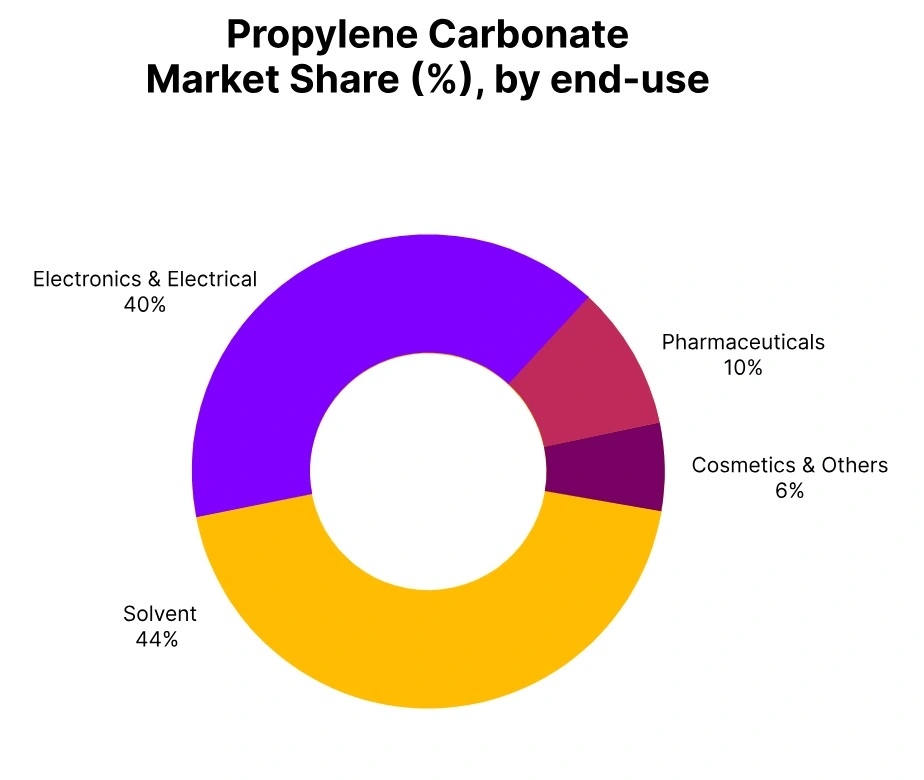
propylene carbonate market share end use

Historically, several events have caused significant fluctuations in Propylene Carbonate prices

  • Geopolitical Tensions (2021–Present): The ongoing tensions in the South China Sea and the U.S.-China trade relations have occasionally disrupted production and shipment, driving up transportation and raw material costs. 
  • Surge in EV Production (2020–Present): With the rise in electric vehicle production, demand for propylene carbonate has increased due to its use in battery production, pushing prices higher in APAC. 
  • China’s Environmental Regulations (2019–Present): Stricter environmental policies in China have led to temporary shutdowns and capacity reductions, particularly in the chemical manufacturing sector. 
  • Typhoon Disruptions (2020–2021): Severe weather events in Southeast Asia disrupted chemical production, leading to short-term price fluctuations. 
  • COVID-19 Pandemic (2020): While demand for industrial solvents initially dropped, a surge in the production of disinfectants and personal protective equipment (PPE) led to a temporary price spike. 
  • China-U.S. Trade War (2018–2019): Tariffs on chemicals and raw materials caused price volatility and disrupted supply chains for propylene carbonate in the APAC region. 


These events highlight the volatility of the propylene carbonate market and emphasize the need for constant monitoring of regional demand, geopolitical factors, and raw material prices to anticipate future price trends. 

Why Price Watch™?

Price Watch™ is your trusted resource for tracking global propylene carbonate price trends. Our platform delivers real-time data and expert analysis, offering deep insights into the key factors driving price fluctuations in the propylene carbonate market. By monitoring critical events such as geopolitical tensions, supply chain disruptions, and economic shifts, Price Watch™ keeps you fully informed of market dynamics.

In addition, Price Watch™ provides detailed forecasts and updates on production capacities, enabling you to anticipate market changes and make well-informed decisions. With Price Watch™, you gain a competitive edge in understanding all the elements that influence propylene carbonate prices worldwide. Stay ahead of the curve with Price Watch’s™ reliable, accurate, and timely propylene carbonate market data.

Track Price Watch's™ propylene carbonate price assessment on a weekly basis since 2015 onwards, along with short-term forecasts, and get access to the detailed report in a downloadable format.

Propylene Carbonate Market Price Trend published by Price Watch™ reflect prevailing spot market conditions, derived from independent research, verified trade inputs, and proprietary market intelligence as of the publication date. Prices are published on the specified Incoterm and represent indicative base market levels, exclusive of applicable taxes, VAT, duties, tariffs, and other statutory charges. Actual transaction values may vary depending on volume, credit terms, contractual structure, and other negotiated conditions. Market prices are inherently subject to volatility, liquidity dynamics, regulatory changes, and evolving trade activity. The information provided is for reference and benchmarking purposes only and does not constitute an offer, recommendation, or guarantee of transactional outcomes. Users should exercise independent commercial judgment and assess their specific contractual, regulatory, tax, and application requirements before making business decisions. Price Watch™ assumes no liability for decisions taken based on this information.

The pricing of Propylene Carbonate is influenced by several key factors, including the cost of propylene oxide, which is a primary raw material in its production. Additionally, fluctuations in global supply and demand for industries such as batteries (especially lithium-ion batteries), solvents, coatings, and personal care products play a significant role. Changes in crude oil prices and energy costs can also impact production expenses. Moreover, trade tariffs, regulatory changes, environmental standards, and logistical costs are external elements that contribute to variability in Propylene Carbonate pricing.

Regional production can have a substantial effect on Propylene Carbonate pricing. Regions with strong local production capabilities, such as Asia-Pacific, often have more competitive pricing due to proximity to raw material sources and lower transportation costs.

In contrast, regions that rely heavily on imports, such as North America or Europe, may experience higher costs due to shipping fees, import duties, and potential supply chain disruptions. Local demand, especially from industries like battery manufacturing and cleaning products, can also impact pricing trends regionally.

The latest trend in Propylene Carbonate pricing has been influenced by the increasing demand in sectors like energy storage (for lithium-ion batteries) and the expansion of the green energy market. As raw material costs fluctuate, along with global supply chain disruptions, prices have seen upward pressure.

To secure better rates, buyers can consider entering into long-term contracts with suppliers, monitoring fluctuations in propylene oxide prices, and exploring bulk purchasing options. Staying informed about industry-specific demand trends, particularly in battery technology and sustainable energy, can also help in securing competitive pricing.

Propylene Carbonate is an organic solvent used in various industries, including electronics, coatings, adhesives, and as a solvent in lithium-ion battery electrolytes. It is also used in cleaning and decreasing applications.

The price of Propylene Carbonate matters because it directly impacts the cost of products in industries such as battery manufacturing, automotive, and consumer electronics, influencing manufacturing costs and final product pricing.

Propylene Carbonate prices vary depending on region, grade, and delivery terms. Prices are typically quoted per metric ton and fluctuate based on supply-demand conditions, raw material costs, and production trends. Price-Watch™ provides real-time pricing insights across global markets to support informed decision-making.

The Propylene Carbonate market experiences moderate price fluctuations driven by factors such as raw material costs (propylene oxide), energy prices, and the demand from lithium-ion battery and coating industries. Key drivers include global demand for batteries, coatings, and electronics, as well as supply-demand imbalances, energy price fluctuations, and geopolitical events.

The largest consumers of Propylene Carbonate are the lithium-ion battery manufacturing industry, where it is used in electrolytes. Other significant consumers include the automotive, coatings, and adhesives industries, which use it as a solvent in their formulations. Additionally, it is used in cleaning, degreasing, and other industrial applications.

Propylene Carbonate is produced through the reaction of propylene oxide with carbon dioxide. It is synthesized in chemical production facilities, with major manufacturing hubs in regions such as North America, Europe, and Asia, where large-scale chemical plants are located.

Major exporters of Propylene Carbonate include China, the United States, and South Korea, with these countries having significant production capacities and robust chemical manufacturing sectors. Export volumes depend on regional demand, production capabilities, and trade conditions, with these countries serving key markets for both battery and solvent applications.

Global supply of Propylene Carbonate is generally sufficient to meet demand, although regional imbalances can occur due to fluctuations in feedstock availability, refinery outages, or logistical disruptions. Demand surges, particularly from the lithium-ion battery sector, can lead to short-term tightness, but overall production capacity is typically adequate.

Propylene Carbonate is available in various grades, with higher-purity grades used in lithium-ion batteries and specialized applications. Higher-purity grades are more expensive due to stricter quality controls and additional processing. Price differences arise from grade, application, and regional market conditions.

A sudden increase in demand, especially from the battery manufacturing sector, can lead to price hikes as supply tightens. Producers may prioritize long-term contract customers, while spot buyers may face higher prices or limited availability. To address demand surges, capacity expansion or new production facilities may be developed, but such expansions take time and substantial investment.

Energy prices significantly impact Propylene Carbonate production, as the manufacturing process is energy-intensive, particularly in chemical synthesis. Higher energy costs, especially for natural gas and electricity, increase production expenses and can lead to higher market prices. Energy price fluctuations also affect the cost of upstream feedstocks like propylene oxide.

Regional price variations for Propylene Carbonate arise from differences in production costs, feedstock access, transportation logistics, import dependence, and local demand conditions. Regions with strong domestic production tend to have more competitive pricing, while markets that rely on imports may experience higher prices due to logistics costs, tariffs, and additional supply chain challenges.

Propylene Carbonate prices are expected to show moderate growth, driven by steady demand from the battery and coatings industries. Supply is generally sufficient, but fluctuations in raw material costs (propylene oxide), energy prices, and global economic conditions may create short-term volatility. Long-term trends are anticipated to remain stable, with moderate price increases expected.

Yes, accurate price forecasts help businesses with procurement planning, cost optimization, and contract negotiation. By leveraging insights from Price-Watch™, businesses can manage risks, take advantage of favorable pricing trends, and make more strategic purchasing decisions.

Global events such as geopolitical tensions, refinery shutdowns, supply chain disruptions, and fluctuations in energy prices can impact Propylene Carbonate availability and pricing. These factors may cause short-term price volatility, particularly during periods of high demand or supply chain bottlenecks, affecting market sentiment and pricing.

Price-Watch™ provides trusted, real-time price assessments, market insights, and forecasts for Propylene Carbonate across regions, helping businesses track trends and make informed decisions.