

In May 2026, Acrylonitrile prices in the USA followed an uncommon pattern. Instead of moving steadily in one direction, the market experienced a sharp mid-month increase before reversing course and ending the month significantly lower.
For traders and procurement teams, this was not just another weekly fluctuation. It highlighted how quickly sentiment can change when supply concerns collide with weakening buying interest.
Acrylonitrile Prices in the USA Show an Unusual Two-Phase Movement
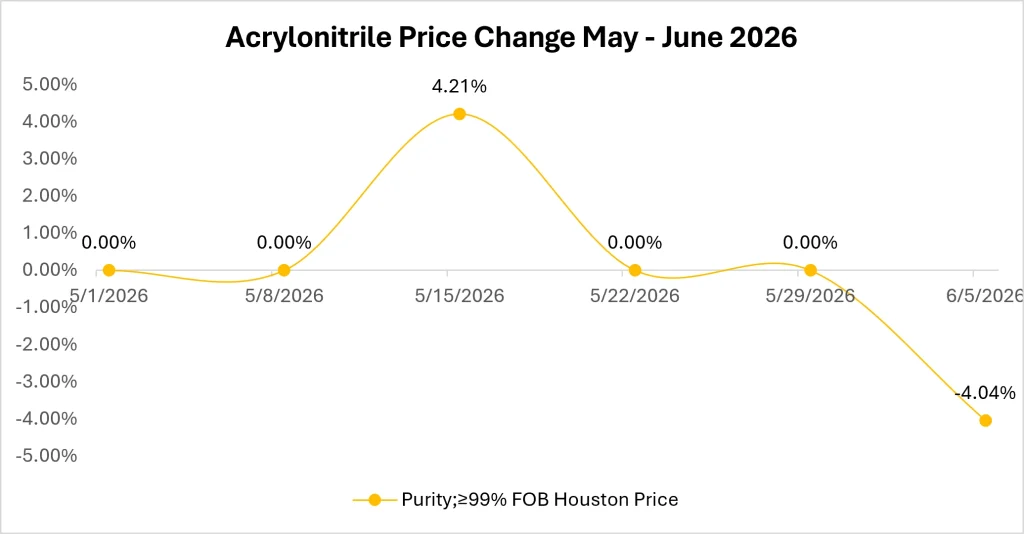
The Acrylonitrile price trend in the USA remained stable during the first half of May before recording a notable increase of more than 4 percent during the third week.
According to Price Watch analysis, the temporary rise was supported by tight inventories, extended lead times exceeding six weeks, and rising ammonia costs, which reached their highest levels since January 2023.
Additional support came from volatility in global energy markets and concerns surrounding shipping flows through the Strait of Hormuz, which strengthened feedstock values across the chain.
Source: Price Watch™ Acrylonitrile Prices
However, the strength proved short lived. In June 2026, Acrylonitrile prices in the USA surrendered much of the momentum built during the previous rally, with the market moving into negative territory after a brief period of tight supply driven support.
This suggests that while supply side concerns were sufficient to create a temporary price spike, they were not strong enough to sustain momentum once buyer resistance began increasing.
How the Acrylonitrile Supply Chain in the USA Is Reacting
The shift is creating uncertainty across the value chain.
ABS producers and acrylic fiber manufacturers are becoming increasingly cautious with raw material procurement, preferring shorter purchasing cycles rather than building inventory at elevated levels.
At the same time, exporters continue receiving overseas inquiries for US Gulf Coast cargoes, but fluctuating domestic availability is making supply planning more difficult.
Two developments deserve attention.
Ammonia remains a critical cost driver and continues to influence production economics.
The recent reversal indicates that buyers are becoming more sensitive to replacement costs than they were earlier in the quarter.
What Could Be Next for the Acrylonitrile Price Trend in the USA
The next one to three months will likely be shaped by inventory replenishment rates, feedstock movements, and export demand. Market participants are closely watching whether supply tightness can continue supporting prices or whether demand caution becomes the dominant force.
Here is a question worth considering; was the mid-May rally a warning of deeper supply constraints ahead, or merely a temporary reaction before the market revealed its true direction?
Stay connected with Price Watch™ for continued insights into Acrylonitrile prices in the USA and the evolving Acrylonitrile price trend in the USA.
Follow Price Watch™ on LinkedIn for real-time raw material insights, pricing trends, supply chain intelligence, and market updates shaping global commodity markets.