

Escalating geopolitical tensions in the Middle East are increasing uncertainty across global Butyl Rubber supply chains by disrupting energy markets, raising feedstock costs, and creating concerns over international trade routes.
As conflicts involving Iran, Israel, and regional powers continue to influence crude oil markets, Butyl Rubber producers and buyers are closely monitoring developments that could affect production economics and material availability.
How geopolitical tensions are affecting Butyl Rubber production
Middle East tensions have heightened concerns over crude oil supply and shipping through the Strait of Hormuz, a key corridor for global energy exports.
Rising crude oil prices have increased the cost of isobutylene, the primary feedstock used in Butyl Rubber manufacturing.
At the same time, higher energy and transportation costs are raising production expenses for suppliers across Asia, North America, and Europe.
According to Price Watch™ analysis, increasing feedstock costs are influencing replacement cost pricing, prompting producers to reassess export offers and procurement strategies amid continued market uncertainty.
Why supply chain risks are reshaping the Butyl Rubber value chain
Geopolitical uncertainty is creating noticeable impacts across the global Butyl Rubber industry.
- Higher crude oil and isobutylene costs are increasing manufacturing expenses and supporting firmer pricing sentiment.
- Concerns over freight disruptions and longer transit times are encouraging buyers to secure inventories through forward purchases and long term supply contracts.
Demand from tire manufacturers, automotive component producers, pharmaceutical packaging companies, and industrial rubber processors remains relatively stable.
However, supply chain uncertainty is becoming a more significant pricing driver than downstream demand alone.
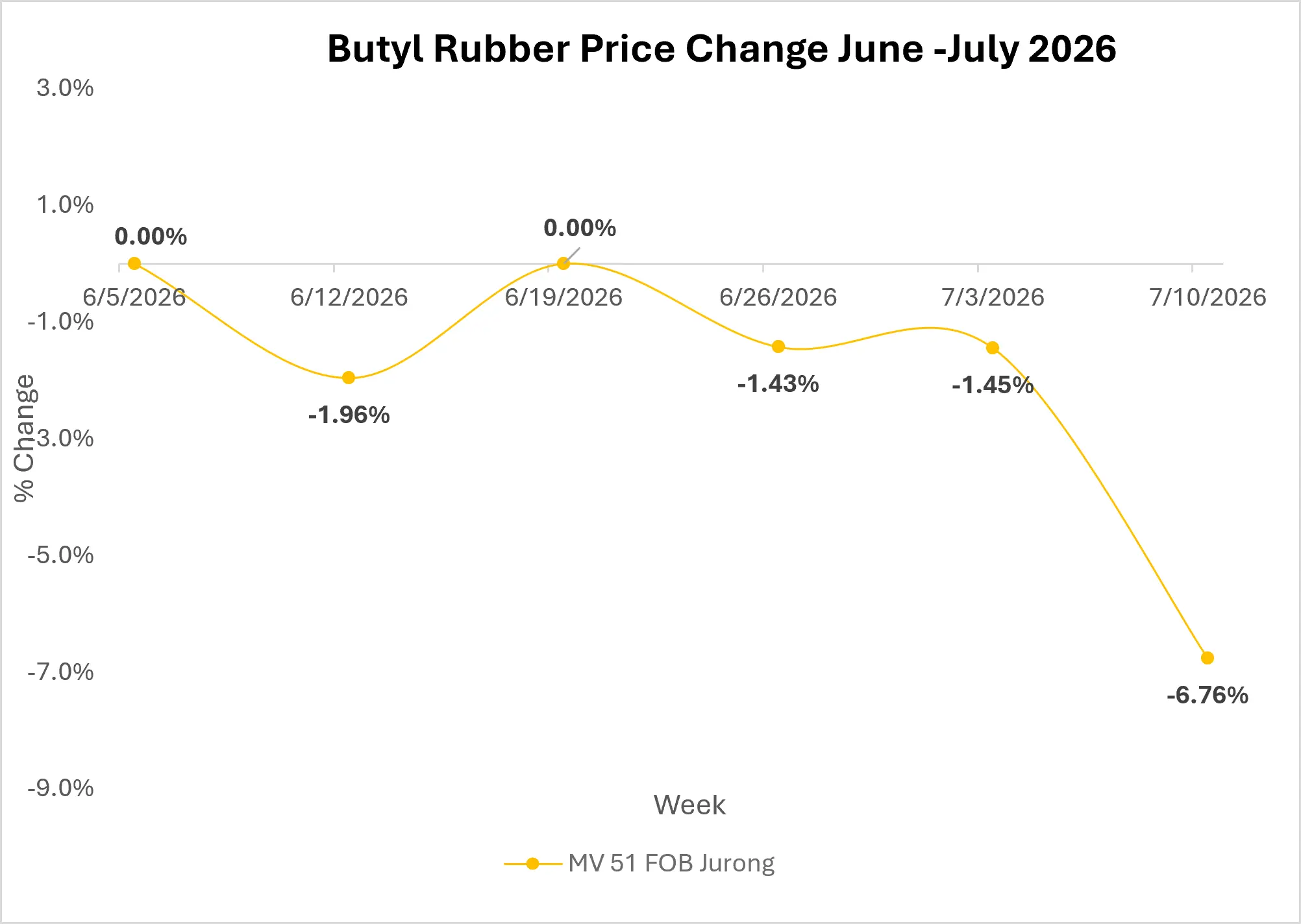
Source: Price Watch™ Butyl Rubber
Butyl Rubber Market Outlook
The global Butyl Rubber market is expected to remain highly sensitive to geopolitical developments, crude oil movements, and logistics conditions over the coming months.
Any further escalation in regional tensions could tighten feedstock availability and increase freight costs, while an improvement in geopolitical stability may help ease supply chain concerns.
The key question for market participants is whether easing geopolitical risks will stabilize Butyl Rubber supply chains, or if continued uncertainty will sustain upward pressure on production costs and global pricing.
According to Price Watch™ analysis, market participants should closely monitor feedstock movements, operating rates, and export activity as these factors are likely to determine the next direction of Butyl Rubber pricing.
The key question remains: will improving demand be sufficient to offset growing competitive pressure from lower-cost production and abundant supply?
To track exact price direction, regional spot prices, and procurement activity, subscribe to Price Watch today.
Follow Price Watch™ on LinkedIn for real-time raw material insights, pricing trends, supply chain intelligence, and market updates shaping global commodity markets.