

After witnessing continuous price increases during the first five months of 2026, the South Indian cotton yarn market has entered a new phase. June has brought the first signs of price correction, creating optimism among textile manufacturers, exporters, and garment producers who have been struggling with rising raw material costs.
The change in market direction has become one of the most discussed topics across major textile centres such as Tiruppur, Coimbatore, Karur, Erode, and Dindigul. While lower yarn prices are offering relief, market participants remain cautious as demand conditions continue to be weak.
Cotton Yarn Prices Under Pressure
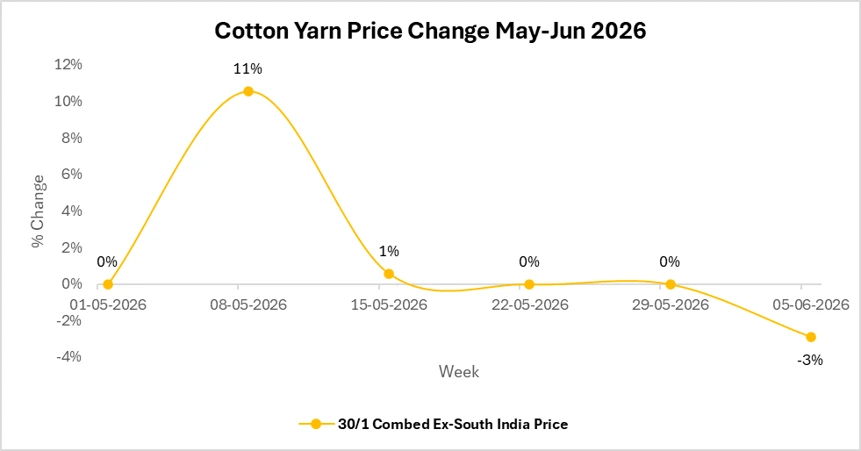
For most of 2026, cotton yarn 30/1 Combed Ex-South India prices remained on an upward path. Rising cotton costs, concerns about raw material availability, and uncertainty in the global market pushed yarn prices significantly higher.
Source: Price Watch™ Cotton Yarn Prices
Between January and May, several yarn counts recorded increases of nearly ₹80-90 per kilogram. The sharp rise increased production costs for spinning mills, knitting units, garment manufacturers, and exporters across South India.
Many textile businesses found it difficult to absorb the higher costs, especially at a time when international buyers were resisting price increases. As a result, profit margins came under pressure throughout the textile value chain.
Government Decision Changes Cotton Yarn Market Sentiment
The biggest factor behind the recent decline in yarn prices is the Central Government’s decision to temporarily remove customs duty on cotton imports from June to October 2026.
The announcement immediately improved market sentiment. Traders and manufacturers expected additional cotton supplies to enter the market, reducing concerns about availability.
Following the policy change, domestic cotton prices began to soften. Cotton prices that were trading near ₹67,000 per candy declined to around ₹63,000 per candy. As raw cotton became cheaper, spinning mills adjusted yarn prices downward.
Most yarn varieties witnessed a correction of approximately ₹10 per kilogram during the first week of June.
Weak Demand Continues to Limit Market Recovery
Despite the fall in prices, the overall market remains cautious. Both domestic and export demand continue to be slower than expected. Buyers are purchasing only according to immediate requirements rather than building inventory.
Export enquiries have also remained limited in several segments. Due to uncertain global economic conditions, many international buyers are placing smaller orders and delaying fresh purchases.
As a result, spinning mills are finding it difficult to maintain higher yarn prices even though production costs remain elevated compared to previous years.
Textile Industry Still Faces Cost Challenges
While the recent decline in yarn prices has provided some relief, textile manufacturers continue to face cost pressures. Earlier this year, sharp increases in yarn prices significantly raised production costs across the industry.
In addition, rising costs of chemicals, dyes, packaging materials, polyester-based products, and transportation continue to put pressure on manufacturers. Ongoing fluctuations in raw material prices have also made it challenging for businesses to manage costs and plan production efficiently.
What Will Drive Cotton Yarn Prices Next?
The direction of cotton yarn prices during the coming weeks will depend on several key factors:
- Cotton import arrivals under the duty-free window
- Domestic cotton availability
- Export demand from major global markets
- Order bookings from garment manufacturers
- International cotton price movements
- Overall economic conditions affecting textile consumption
If cotton supplies continue to improve and demand remains moderate, yarn prices may witness further corrections. However, any improvement in export orders or disruption in cotton availability could again influence market sentiment.
Cotton Yarn Market Outlook for June and Beyond
As per Price Watch™, Cotton yarn 30/1 Combed Ex-South India prices are expected to remain soft in the coming weeks. Improved cotton availability, lower cotton prices, and sluggish demand may push yarn prices down by a further 2-3% over the next month. The market is likely to stay under pressure unless domestic and export demand shows a strong recovery.
For more cotton yarn price updates, market insights, industry news, and daily pricing trends, visit Price Watch™ regularly. Stay informed with the latest developments in the textile market and make better business decisions with timely and reliable market information.
Follow Price Watch™ on LinkedIn for real-time raw material insights, pricing trends, supply chain intelligence, and market updates shaping global commodity markets.