

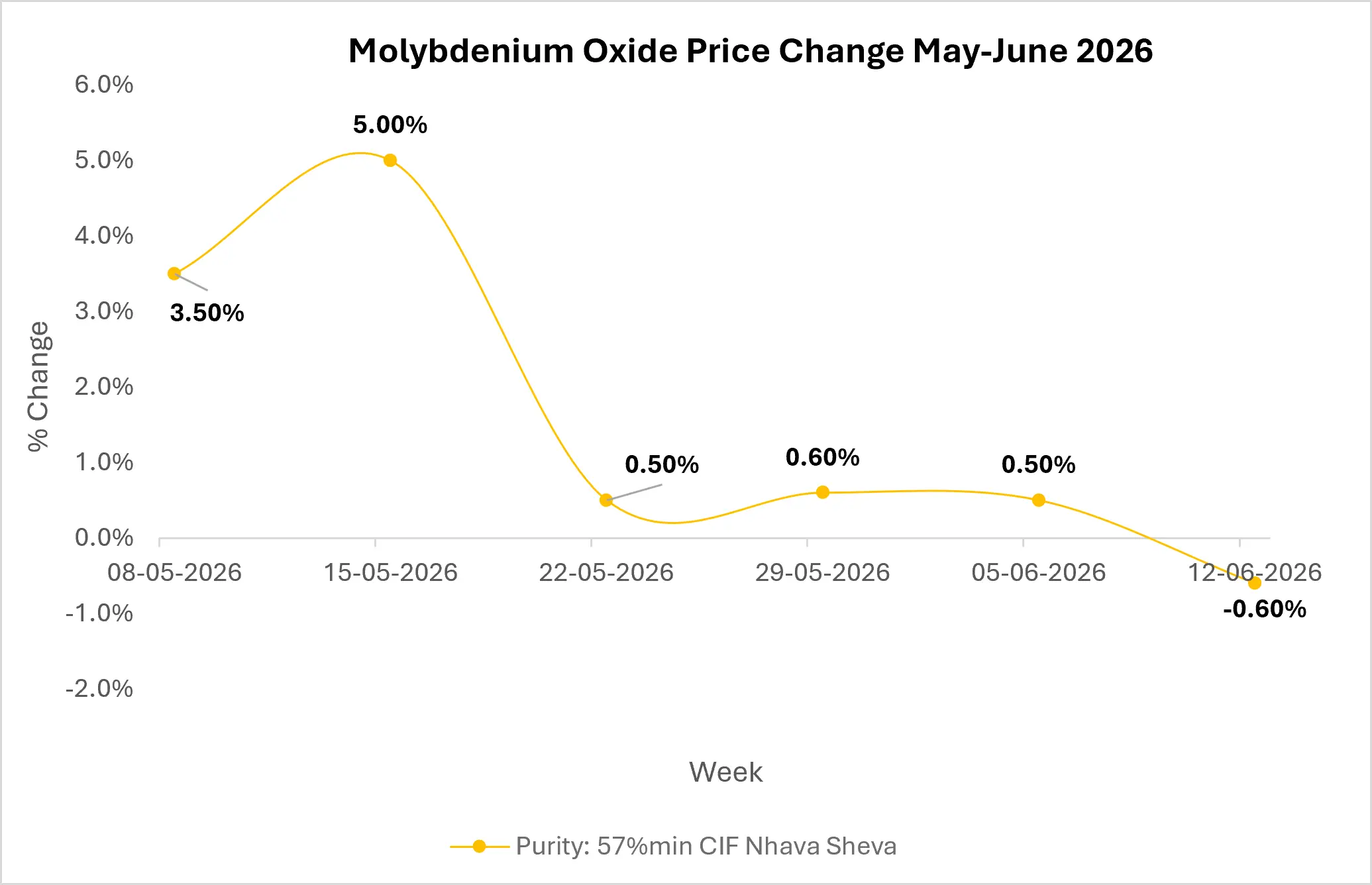
Global molybdenum oxide prices registered a minor retreat in the second week of June, arresting a multi-week period of robust appreciation across key metallurgical hubs.
Following a prolonged phase of tight supply narratives and aggressive restocking cycles, the pricing velocity for standard technical-grade molybdenum oxide finally plateaued, introducing a calculated cooling period into the minor metals complex.
The minor downtick marks a clear departure from the consecutive weekly gains observed throughout May, capturing the immediate attention of global alloy manufacturers and raw material procurement desks.
This tactical pause raises a critical operational question for bulk consumers and industrial stakeholders: is the current price softening a brief fundamental correction, or does it signal a deeper structural rebalancing across the metallurgical supply chain?
Source: Price Watch™ Molybdenum Oxide Prices
What has driven the decline in Molybdenum Oxide prices?
- Weak Stainless Steel Demand
The minor pricing correction is primarily rooted in a macro-level deceleration across the global stainless-steel sector, which represents the largest downstream sink for molybdenum oxide additives.
After a period of aggressive industrial purchasing, major stainless mills particularly in East Asia and Europe have scaled back their immediate spot inquiries as finished product inventories began building at service centers.
By withholding fresh procurement orders, downstream mills successfully forced speculative merchants to adjust their premium expectations, exposing a lack of immediate physical urgency in bulk alloying applications.
- Reduced Alloy Sector Consumption
The alloy manufacturing sector, responsible for high-molybdenum superalloys used in aerospace and energy, has delayed procurement citing inventory adequacy. Ferro-molybdenum prices have softened alongside oxide, creating a cascading effect.
This shift reflects end-user confidence concerns rather than absolute demand collapse, implying suppliers must offer more competitive terms to maintain order books.
- Softening Chinese Industrial Activity
China’s industrial output data for May showed muted growth in steel production and mining activity, signaling reduced molybdenum intake.
As the world’s largest molybdenum consumer, China’s slowdown exerts disproportionate downward pressure on global oxide prices.
This macroeconomic softness suggests the decline may persist unless Chinese policy stimulus rebounds.
Stainless steel producers benefit from lower input costs, improving short-term margins. Alloy manufacturers face revenue pressure but gain flexibility in raw material sourcing.
Traders and distributors holding pre-rally inventory may incur losses if prices continue falling. Mining companies, particularly those with near-term production expansions, face reduced pricing power.
End-use industries in construction and automotive gain cost advantages but remain cautious about future demand.
Molybdenum Oxide Market Outlook
Over the next few weeks, global molybdenum oxide prices are expected to trade within a tightly consolidated horizontal band, with a high probability of finding strong technical support as the current profit-taking wave runs its course.
Market participants should closely monitor the volume and pricing of upcoming Chinese steel mill tenders, alongside any localized logistical disruptions in South American concentrate shipping corridors.
Ultimately, the recent drop in molybdenum oxide prices represents a healthy market correction that strips out the speculative foam accumulated during the spring rally.
For strategic procurement teams and industrial buyers, this localized retreat should not be viewed as a structural market breakdown, but rather as an optimal buying opportunity to secure medium-term raw material allocations at stabilized levels before long-term deficit pressures reassert themselves.
Follow Price Watch™ on LinkedIn for real-time raw material insights, pricing trends, supply chain intelligence, and market updates shaping global commodity markets.