

The global ferrous scrap market has entered a period of correction, with Heavy Melting Scrap (HMS) prices witnessing a steady decline over the past several weeks.
After enjoying strong momentum during the early part of the year, the market is now facing softer demand, cautious buying sentiment, and increasing supply availability.
While declining prices often create uncertainty among traders, recyclers, and steel producers, they also provide valuable insights into market fundamentals and future opportunities.
Understanding the factors behind the current downturn is essential for making informed business decisions in an increasingly dynamic steel and scrap industry.
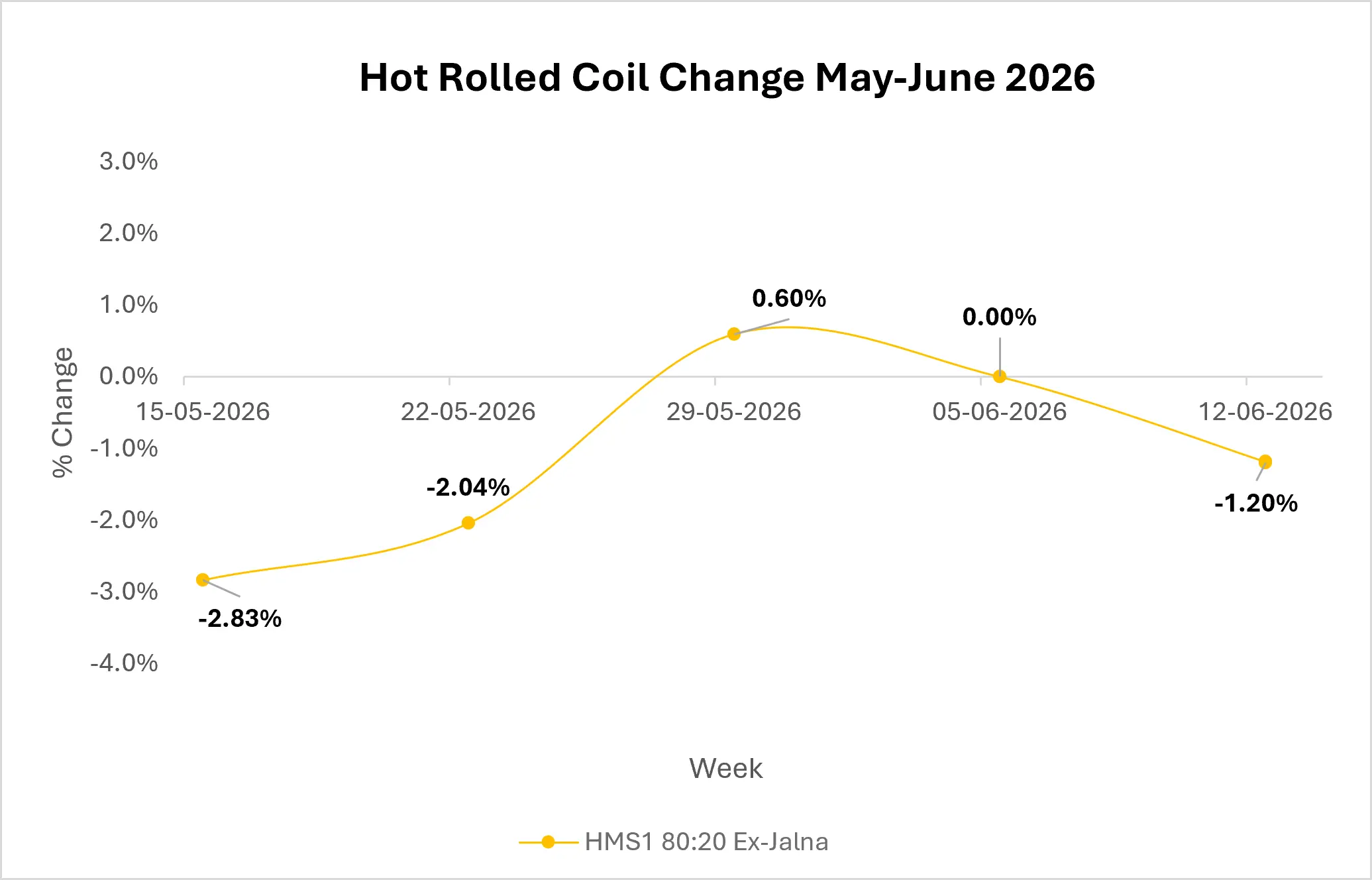
Source: Price Watch™ HMS Scrap Prices
Why Are HMS Prices Declining?
- Slower Demand from Steel Producers
The primary driver behind the recent price decline is weaker demand from steel mills. Across several regions, steel consumption has not matched earlier expectations, particularly in construction and manufacturing sectors.
As a result, mills have reduced raw material purchases and adopted a more cautious procurement strategy.
- Improved Scrap Availability
Scrap collection volumes have increased in many exporting countries, resulting in better availability of HMS material.
Higher supply coupled with moderate demand naturally places downward pressure on prices and creates a more buyer-friendly market environment.
- Reduced Import Buying Activity
Major scrap-importing nations have slowed their purchasing activity, expecting further price corrections.
Buyers are focusing on short-term requirements rather than building inventories, contributing to weaker transaction prices and softer market sentiment.
- Global Economic Uncertainty
Concerns surrounding economic growth, inflation, interest rates, and industrial production continue to impact commodity markets worldwide.
Since scrap demand is closely linked to manufacturing and construction activity, any slowdown in these sectors directly affects HMS pricing.
Indian HMS Market Scenario
India’s scrap market has closely followed the global trend, with imported HMS 1&2 (80:20) prices softening over recent weeks.
Secondary steel producers and induction furnace operators have become increasingly cautious in their purchasing decisions, preferring to buy only for immediate requirements rather than committing to large volumes.
Several factors are influencing the Indian HMS market:
- Adequate inventory levels at mills and traders.
- Pressure on finished steel prices, reducing mill profitability.
- Seasonal slowdown in construction activity during the monsoon period.
- Expectations of further corrections in international scrap prices.
Consequently, buyers are negotiating aggressively and delaying bookings wherever possible. This cautious approach has reduced demand for imported cargoes and placed additional pressure on suppliers.
However, despite short-term weakness, the long-term outlook for India’s scrap industry remains highly encouraging. Government-led infrastructure projects, rapid urbanization, industrial expansion, and growing investments in sustainable steelmaking continue to support future demand for ferrous scrap.
As India moves toward greater adoption of Electric Arc Furnaces (EAFS) and environmentally responsible steel production methods, scrap consumption is expected to increase significantly over the coming years.
This structural demand provides a strong foundation for market recovery once current uncertainties ease.
Opportunities Amid HMS Market Correction
Market corrections are often viewed negatively, but they also create strategic opportunities.
For Steel Mills
Lower HMS prices can improve production economics and allow mills to secure raw materials at more competitive levels. Companies with strong liquidity may benefit from purchasing during periods of market weakness.
For Traders
Price volatility creates opportunities for traders who closely monitor global market trends, freight movements, and regional supply-demand dynamics. Strategic inventory management becomes crucial in preserving margins.
For Scrap Suppliers
Suppliers may face short-term pressure on profitability; however, maintaining strong customer relationships and flexible pricing strategies can help navigate the current market environment successfully.
HMS Market Outlook
The answer largely depends on steel demand and market confidence. If construction activity improves, industrial production strengthens, and mills return to the market for replenishment purchases, HMS prices could stabilize and gradually recover.
Additionally, the global push toward decarbonization and sustainable steelmaking continues to support long-term scrap demand.
Ferrous scrap remains one of the most important raw materials for reducing carbon emissions in steel production, ensuring its strategic importance in the years ahead.
The recent decline in HMS scrap prices reflects a market adjustment driven by cautious buying, adequate supply, and softer steel demand. While short-term sentiment remains bearish, the fundamental outlook for the scrap industry remains strong.
For India in particular, temporary market weakness should not overshadow the country’s long-term growth story.
Infrastructure development, expanding steel production capacity, and increasing reliance on scrap-based steelmaking position India as one of the most important growth markets for the global ferrous scrap industry.
In today’s volatile environment, success will depend not on reacting to price movements alone, but on understanding the broader market fundamentals.
Those who remain informed, disciplined, and strategically positioned will be best prepared to capitalize on the next phase of the HMS scrap market cycle.
Follow Price Watch™ on LinkedIn for real-time raw material insights, pricing trends, supply chain intelligence, and market updates shaping global commodity markets.