

The global NBR market continues to navigate a complex landscape shaped by evolving feedstock economics, shifting trade flows, and measured downstream demand.
While improved availability of key raw materials has enhanced production flexibility, buying interest across major consuming sectors remains selective. At the same time, competitive export offers from Asia are reshaping trade dynamics and influencing pricing discussions across international markets.
Feedstock Dynamics Shape NBR Fundamentals
At first glance, the upstream landscape appears supportive for the NBR market. The easing of geopolitical uncertainties has brought greater stability to crude oil and naphtha markets, reducing volatility across key feedstocks such as butadiene and acrylonitrile.
Improved raw material availability and softer input costs have enhanced production economics, enabling manufacturers to operate comfortably and maintain steady supply levels.
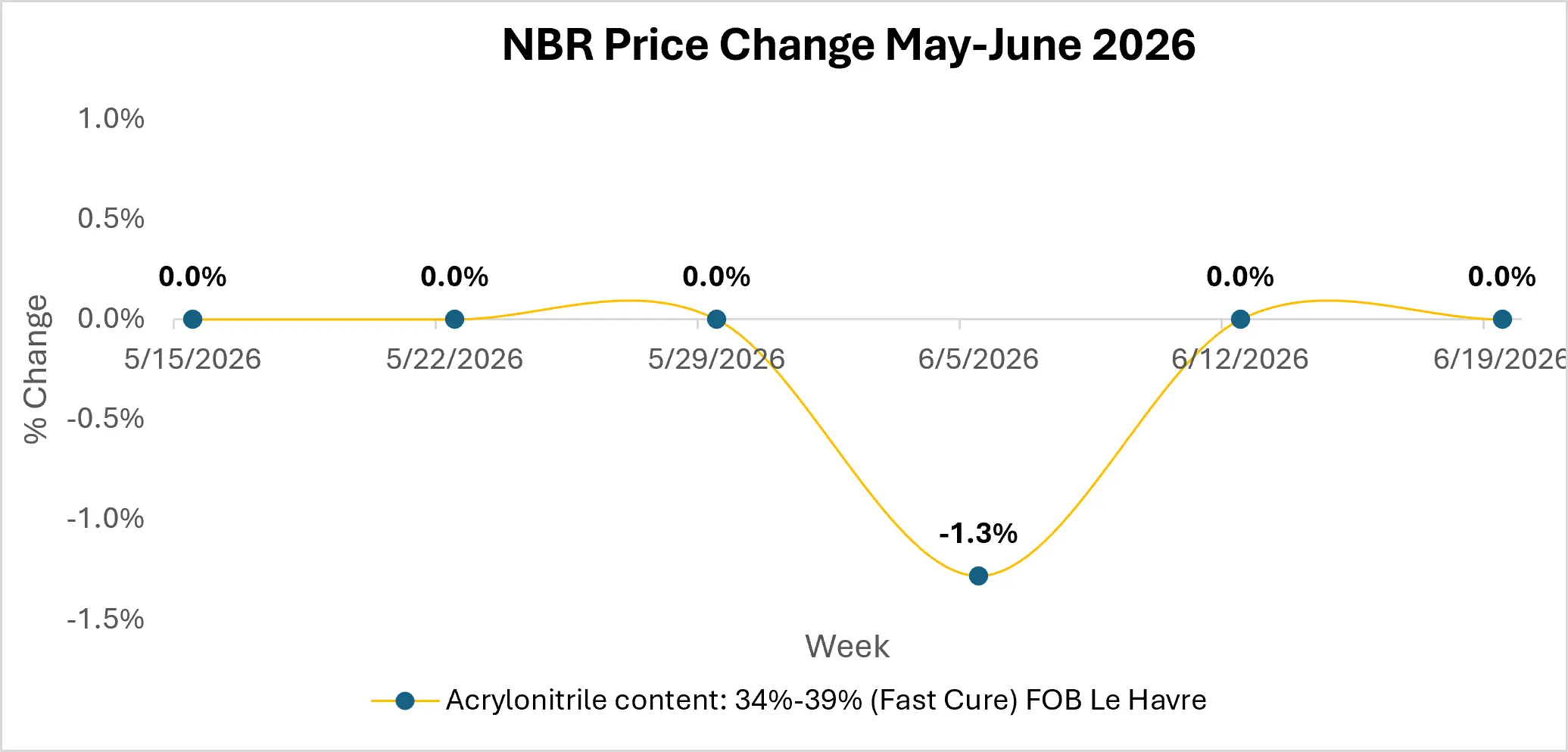
Yet, a key question remains: why has this feedstock relief not translated into stronger NBR prices? The answer lies downstream.
Demand from major consuming sectors continues to recover at a measured pace, limiting buyers’ willingness to build inventories.
As a result, the benefits of lower production costs are being reflected more in abundant material availability than in any significant upward movement in NBR pricing.
Source: Price Watch™ NBR
Asia Continues to Shape Global NBR Trade
Asia continues to dominate the global NBR landscape, accounting for a significant share of both production capacity and export availability.
Supported by competitive manufacturing economics, integrated feedstock chains, and healthy operating rates, major Asian producers have maintained a strong presence in international markets.
This dominance has enabled suppliers across the region to actively target export destinations, with Europe emerging as a key outlet for competitively priced NBR cargoes.
As Asian material continues to enter the region, imported offers are increasingly serving as a reference point in European pricing discussions.
Competitive NBR Imports Increase Pressure on Regional Suppliers
The growing availability of Asian-origin material has strengthened the negotiating position of European buyers, who now have access to a wider range of sourcing options.
Faced with competition from lower-priced imports, European distributors have been compelled to reassess their commercial strategies and offer greater pricing flexibility to retain market share.
Consequently, Asian material inflows are not only influencing trade flows but are also reshaping buyer sentiment and pricing dynamics across the European NBR market, reinforcing Asia’s role as a key driver of global market trends.
Follow Price Watch™ on LinkedIn for real-time raw material insights, pricing trends, supply chain intelligence, and market updates shaping global commodity markets.