

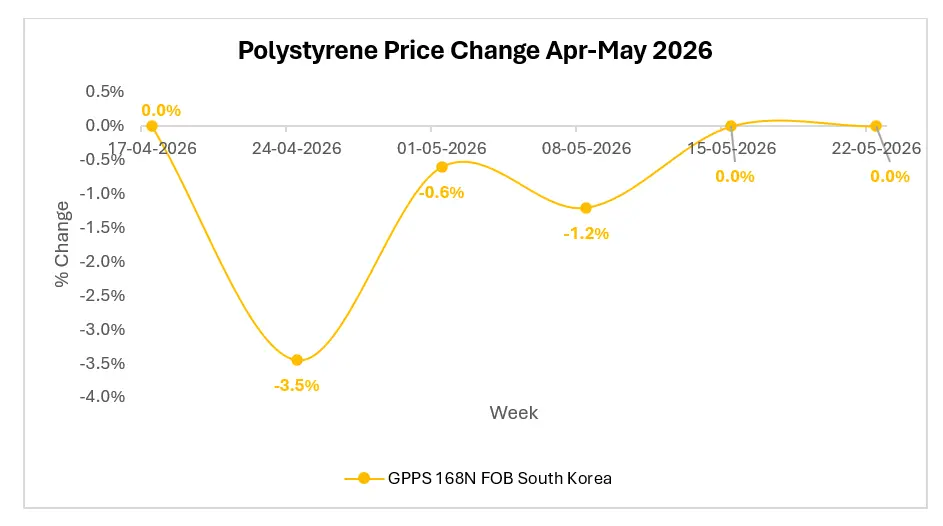
Polystyrene prices continued to decline across key Asian markets even as crude oil and upstream benzene costs remained firm during recent weeks. The unusual disconnect between feedstock strength and finished polymer pricing has started raising concerns among producers and traders, especially as downstream demand recovery remains slower than expected.
Normally, higher crude oil values support styrene monomer and polystyrene pricing across regional markets. However, the current market cycle is being shaped more by weak consumption and excess material availability than by raw material pressure. According to Price-Watch™ analysis, buyers across packaging, appliances, and disposable product sectors have reduced aggressive procurement activity, forcing suppliers to offer flexible deals to maintain sales volumes.
Why Polystyrene Prices Are Falling Despite Higher Feedstock Costs
The biggest factor behind the recent correction is uneven downstream demand. Several converters and packaging companies shifted toward cautious purchasing after earlier inventory accumulation, while weak export orders further reduced fresh buying interest across the market.
At the same time, spot supply availability improved as operating rates at several Asian production facilities remained stable. Traders holding higher-cost inventory also started lowering offers to clear stock before further market correction.
Another important development is the widening pressure on producer margins. Rising styrene monomer costs linked with crude oil movements are increasing production expenses, but weak demand conditions are limiting the ability of manufacturers to fully pass those costs into the market.
Impact Across the Value Chain
- Packaging and disposable product manufacturers are delaying bulk procurement due to uncertain end-user demand.
- Traders are facing inventory pressure as spot offers soften faster than expected.
Import competition is also becoming more active in several Asian markets as buyers search for lower-priced cargoes to reduce procurement costs. This has increased pressure on domestic suppliers already dealing with slower order flow.
Polystyrene Market Outlook
The global Polystyrene market is expected to remain sensitive to styrene monomer costs, crude oil fluctuations, and downstream demand from packaging and consumer goods sectors in the coming months. Market direction will largely depend on feedstock movement, operating rates, import competition, and buying activity across Asian markets.
According to Price-Watch™ analysis, Polystyrene prices may move by nearly 2% to 3% in the near short term due to changing styrene costs, uneven downstream demand, and rising freight and logistics expenses across Asia.
To track exact price direction, regional spot prices, and procurement activity, subscribe to Price-Watch™ today.
Follow Price-Watch™ on LinkedIn for real-time raw material insights, pricing trends, supply chain intelligence, and market updates shaping global commodity markets.