

Benzene prices are shaped by far more than supply and demand. As one of the most important aromatic chemicals, its market reflects movements across the entire petrochemical value chain from crude oil and refinery operations to downstream industries such as styrene, phenol, and nylon intermediates.
In Europe and the United States, differing production structures and market fundamentals continue to create distinct pricing trends while remaining interconnected through Atlantic Basin trade.
Crude oil sets the foundation for benzene economics by influencing Naphtha, the primary feedstock for aromatic production. Rising Crude prices increase production costs, often supporting benzene values, while lower oil prices reduce feedstock costs and weigh on the market.
However, feedstock economics alone do not determine pricing. Refinery operating rates, cracker utilization, and downstream demand ultimately dictate market direction.
Europe and the US Produce Benzene Very Differently
Europe leans on naphtha-fed steam crackers, where pyrolysis gasoline is a key benzene source. Lower cracker run rates or maintenance directly cut supply. The US works differently. Shale gas made ethane the dominant cracker feedstock, keeping ethylene costs low but producing far less benzene as a byproduct.
That leaves US supply more dependent on refinery catalytic reformers, meaning gasoline demand cycles matter as much as chemical demand. European refiners also carry higher energy costs and tighter environmental requirements than their US Gulf Coast counterparts.
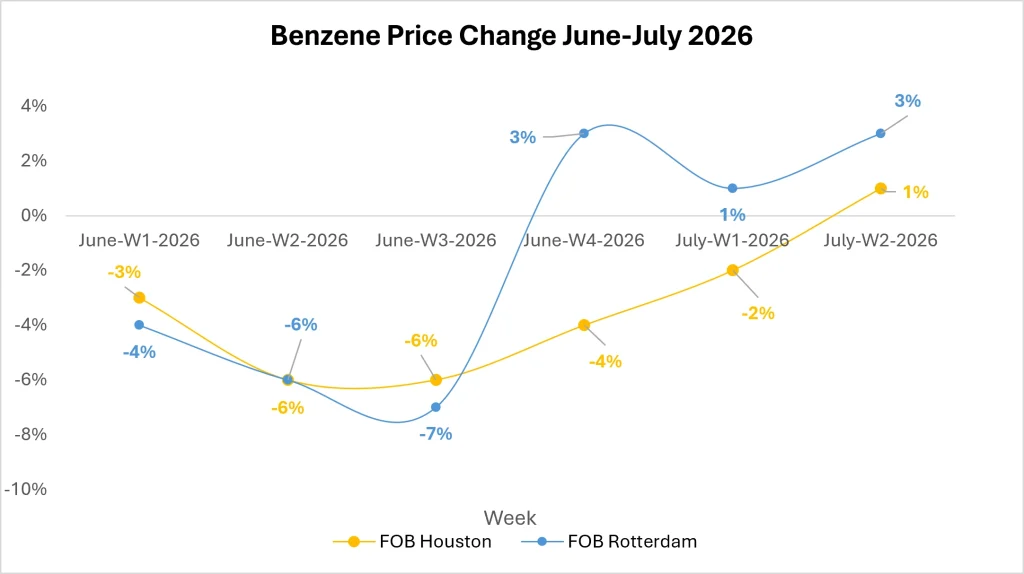 Source: Price Watch™ Benzene Prices
Imports into US continue despite barriers
The US remains a large chemical importer, despite legislative efforts and market disruptions caused by the Middle East war. About 100,000 mt of benzene will arrive in the US in the second half of 2026, which should ease the tight US market, but the arbitrage could remain attractive if current spreads hold and gasoline prices remain firm.
Strong domestic gasoline values and elevated octane assessments for summer 2026 pushed US benzene prices. “Recent imports and weaker crude prices have provided some relief, but volatility remains the base case scenario.”
Tariffs have also impacted the benzene market. US imports for Chapter 27 benzene, not subject to tariffs, have risen 244% from March 2025 to March 2026. But Chapter 29 benzene imports, subject to tariffs, have dropped by 50%, according to US International Trade Commission data.
Benzene Market Outlook
The Atlantic Basin arbitrage stays active as long as the US price premium holds and gasoline values stay firm. Downstream demand from styrene and phenol chains will be the real test of whether current levels hold into the second half.
So here is the question worth sitting with. If imports are rising under one tariff code and falling under another, how long before that gap closes, and what happens to the Atlantic spread when it does? For pricing trends, keep an eye on Price Watch™.
Follow Price Watch™ on LinkedIn for real-time raw material insights, petrochemical market trends, supply chain intelligence, and global commodity updates.