

Mixed Xylene prices are increasingly being shaped by upstream feedstock dynamics rather than downstream demand alone. Although consumption from paints, coatings, adhesives, and solvent applications remains steady, fluctuations in Crude Oil and Naphtha have become the primary drivers of pricing in 2026. Rising production costs and changing refinery economics are now exerting greater influence on the market than traditional consumption trends.
Crude Oil Continues to Drive the Aromatics Chain
Crude Oil continues to play a central role in the aromatics value chain. Geopolitical developments, production decisions by major oil-producing countries, and supply disruptions have created volatility across energy markets, directly impacting refinery operations. As Crude Oil prices increase, the cost of producing Naphtha also rises, pushing up feedstock expenses for downstream aromatics, including Mixed Xylene(MX).
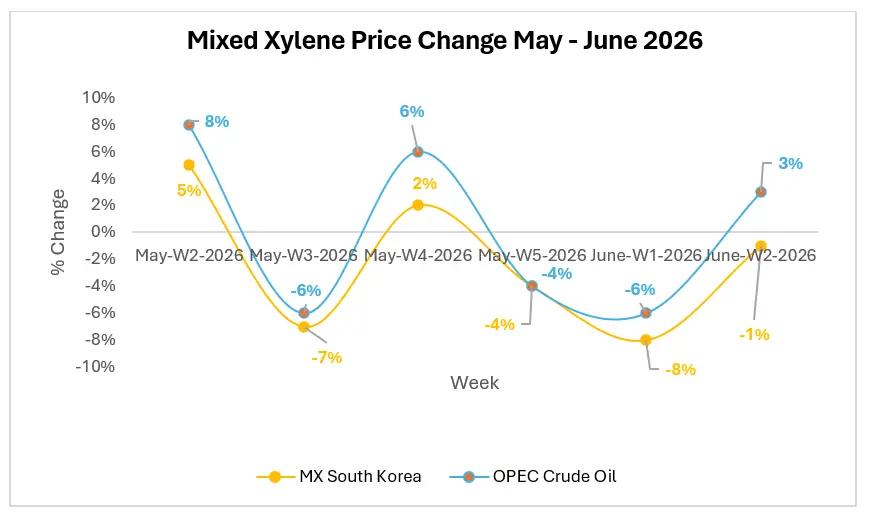
Source: Price-Watch™ Mixed Xylene Prices
Naphtha Emerges as a Key Market Indicator
Naphtha has become one of the most closely watched indicators for Mixed Xylene markets. As the primary feedstock used in catalytic reforming units, any movement in Naphtha prices is quickly reflected in aromatics production costs. Tight Naphtha availability and elevated procurement costs have increased pressure on refiners, prompting higher offers for Mixed Xylene.
Supply-Side Dynamics Support Market Stability
Refinery operating strategies have also become a significant market driver. When refiners allocate more feedstock toward gasoline blending instead of aromatics extraction, Mixed Xylene availability can tighten. At the same time, elevated Crude Oil and Naphtha costs have reinforced seller confidence across major Asian markets, helping prices remain stable even during periods of moderate industrial consumption.
Key Factors to Watch
Over the coming months, market participants should closely monitor:
- Crude Oil price movements and geopolitical developments.
- Naphtha crack spreads and feedstock availability.
- Refinery operating rates and maintenance schedules.
- Supply availability across key Asian markets.
What Lies Ahead for Mixed Xylene?
The Mixed Xylene market is increasingly being shaped by upstream feedstock economics rather than downstream consumption alone. As Crude Oil and Naphtha continue to influence production costs and refinery decisions, understanding these feedstock trends will remain essential for anticipating future price direction and market opportunities.
Follow Price-Watch™ on LinkedIn for real-time raw material insights, pricing trends, supply chain intelligence, and market updates shaping global commodity markets.