

Indonesia has not changed how much palm oil it produces. What changed is how it will leave the country, and that single announcement is already reshaping trade flows across Asia.
In May 2026, Indonesia announced that all crude palm oil exports must pass through a newly created government body called PT Danantara Sumberdaya Indonesia, or DSI, instead of being sold directly by private exporters to buyers.
The stated reason was years of under-invoicing that cost the country heavily in lost tax revenue.
The policy rolls out in two stages. Through August 2026, exporters continue business as usual but route paperwork through DSI.
From September 2026, the full transaction including contracts, shipments, and payments moves entirely under DSI control. That is when private exporters lose direct commercial flexibility.
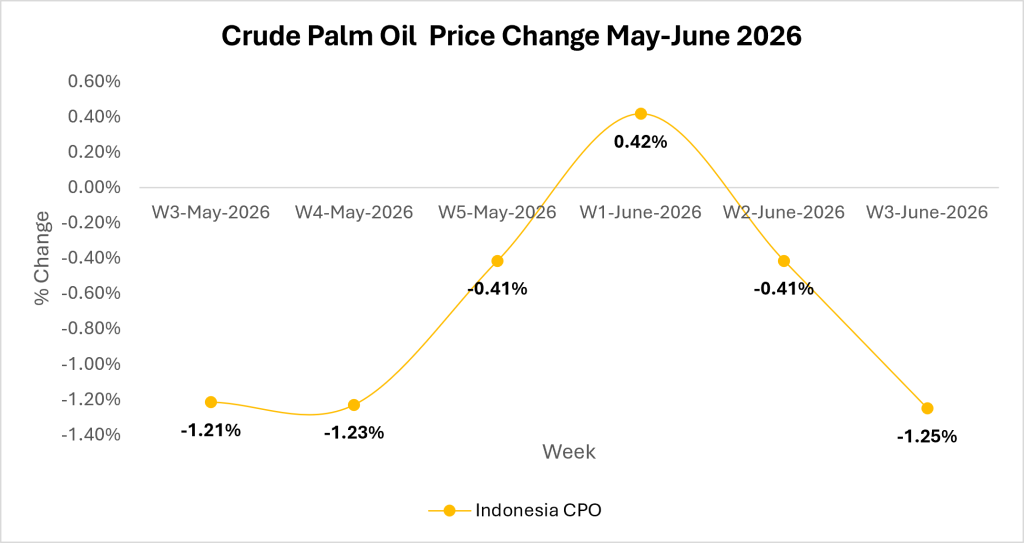
Source: Price Watch™ Palm Oil Prices
Why Indonesian Supply Is Flooding Palm Oil Market Right Now
Exporters are not waiting around. Knowing their room to negotiate directly shrinks after September, the rational move is to sell maximum volumes now while the old system still works. Supply is being pushed out at softer rates to move fast.
Buyers in India, China, and other major importing regions have responded exactly as expected. Large volumes are being booked from Indonesia right now, pulling forward demand that would normally spread across several months.
A couple of things stand out here:
- This discount exists because sellers are racing a deadline, not because production costs have fallen.
- Demand is being heavily front loaded into a very short window.
What This Means for the Broader Palm Oil Market
While Indonesian supply moves at competitive terms, other origins have held their offers steady. That gap is costing them business. Malaysian shipments fell sharply in May, well below market expectations, and inventories built as a result. The demand did not disappear. It simply shifted.
Once DSI takes full control, the rush ends. Terms tighten and the discount disappears. Buyers who stock up will be comfortable. Those who waited may find a very different market after September.
So here is the real question. Are importers booking enough now, or are they underestimating how fast this window will close.
This is where Price Watch™ helps market participants track policy driven supply shifts, trade flow changes, and pricing direction before the market moves faster than expected.
Price Watch™ delivers the regional market intelligence this evolving palm oil industry demands.
Follow Price Watch™ on LinkedIn for real-time raw material insights, pricing trends, supply chain intelligence, and market updates shaping global commodity markets.