

Petrochemical buyers spent the last five months tracking one chokepoint. This week they had to start tracking two. A missile and drone campaign has now damaged or disrupted close to half of the Middle East’s operational refineries, and a fresh wave of tanker strikes in the Red Sea has opened a second front just as the region’s petrochemical output was already buckling.
For anyone sourcing Ethylene, Propylene, Polyurethane raw materials or the polymers built on top of them, this is no longer a regional story. It is a global feedstock story.
Half the Region’s Refineries Are Compromised
Since the conflict began, industry assessments built on satellite imagery and energy market tracking point to between 37 and 39 refineries, gas fields, storage terminals and other strategic energy facilities damaged or significantly disrupted across nine countries.
The Middle East normally runs 73 active crude refineries, with Iraq hosting the most individual sites at 14 and Saudi Arabia carrying the largest share of processing capacity at roughly 27% of the region’s total.
At the peak of the disruption, close to 9% of global oil refining capacity was estimated to be offline at once, tightening product supply and raising uncertainty over the safety of energy infrastructure in one of the world’s most concentrated hydrocarbon producing regions.
The country-by-country picture below shows how uneven, and how serious, the damage has become.
| Country | Status |
| Bahrain | Sitra refinery diesel hydrotreater unit damaged by drone strikes, not expected back before November 2026. Two hydrogen units under technical assessment. |
| Iran | LORC Lavan and PGSOC Bandar Abbas refineries facing significant operational disruption; maintenance turnarounds postponed across the country. |
| Iraq | Erbil and Lanaz refineries in Kurdistan hit by drone attacks; both have since resumed normal operations. |
| Israel | Haifa refinery, rated at 197,000 bpd, sustained damage that temporarily cut processing capacity. |
| Qatar | Ras Laffan under precautionary shutdown since Q2 2026; Mesaieed running at reduced rates since March, maintenance deferred to 2027. |
| Kuwait | Mina Al-Ahmadi, 346,000 bpd, and Al Zour operating at reduced rates since March. Mina Abdullah, 454,000 bpd, remains shut down. |
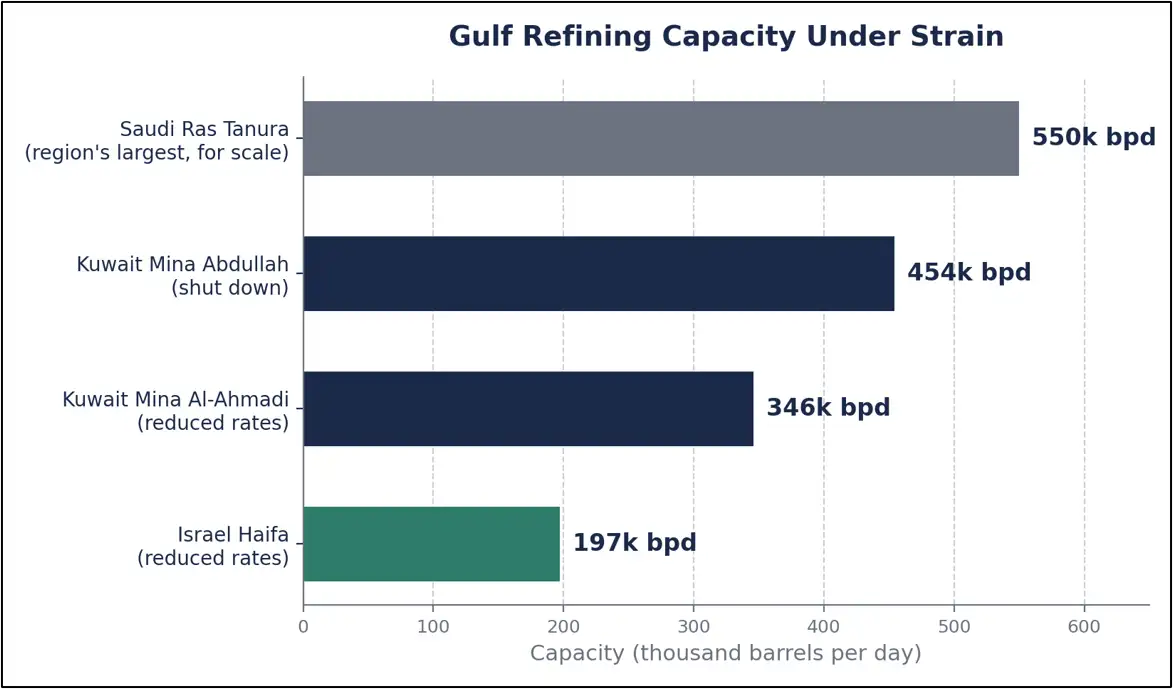
Figure 1. Selected Gulf refinery capacities against the region’s largest single site. Source: Price Watch™
Kuwait and the Weight of Lost Capacity
Kuwait has taken the heaviest single hit. Its Mina Al-Ahmadi refinery, rated at 346,000 barrels a day, and its Mina Abdullah refinery, rated at 454,000 barrels a day, both sustained damage that forced operators to cut processing rates.
Mina Abdullah remains shut down while repair work continues, and Al Zour has been running at reduced rates since March.
Beyond Kuwait, storage terminals, pipelines and crude handling infrastructure in Bahrain, Saudi Arabia, Qatar and the United Arab Emirates have also taken damage.
Fujairah, one of the largest oil storage and bunkering hubs positioned outside the Strait of Hormuz, has seen disruptions that complicate both crude exports and fuel distribution across the Gulf.
Iran’s Petrochemical Sector Has Nearly Collapsed
Refining is only half of the damage picture. Iran, a major source of petrochemical feedstocks and polymer raw materials, has seen its production infrastructure hit hard, particularly around the South Pars complex in Asaluyeh, one of the largest integrated gas and petrochemical hubs anywhere in the world.
Roughly 75% of Iran’s total petrochemical production capacity is now non-operational. Export capability has fared even worse, with close to 85% of the country’s overseas petrochemical shipments effectively halted by damaged infrastructure, disrupted logistics and restricted port access.
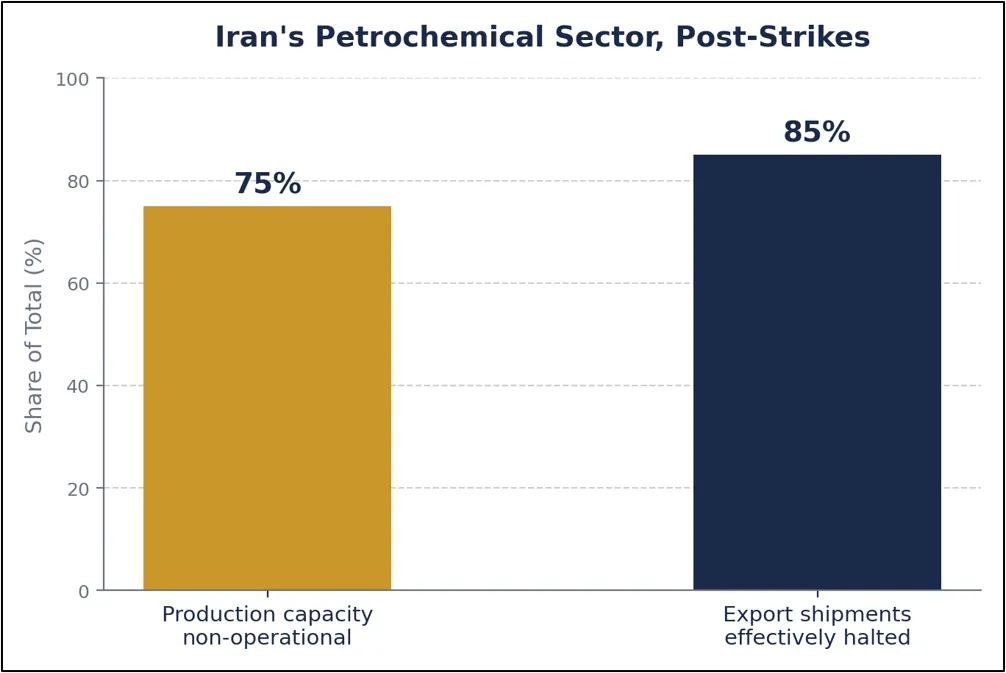
Figure 2. Iran’s petrochemical sector, production and export capacity affected. Source: Price Watch™
The knock-on effects are already visible outside Iran. Regional supply of ethylene and propylene, the two building blocks behind most polyethylene and polypropylene, has tightened. Polyurethane raw materials including methylene diphenyl diisocyanate and toluene diisocyanate are also running short, affecting manufacturers across automotive, construction, appliance and packaging supply chains.
Red Sea Attacks Add a New Chokepoint
On 23 and 24 July, Houthi fighters struck two Saudi oil tankers, the Encelia and the Layla, in the Red Sea near the port of Jizan, and declared a naval blockade against Saudi Arabia.
The strikes matter because Saudi Arabia had been routing millions of barrels a day through the Red Sea by pipeline specifically to avoid Iran’s blockade of the Strait of Hormuz.
Brent crude jumped more than 6% in a single session on the news, breaking through the $XXX/MT level for the first time since May. The route now under threat, sometimes called the Gate of Tears, is the second most important energy shipping corridor after Hormuz, and several tankers have already changed course to avoid it.
The United States responded with a thirteenth consecutive night of air strikes on Iran, prompting Iranian missile fire toward neighbouring countries hosting US bases.
Washington has said it will hold Iran responsible for any further Houthi attacks, raising the prospect of a broader military escalation rather than a contained shipping dispute.
The Hidden Factor Almost Nobody Is Watching
Here is what is easy to miss underneath the headlines: prices have not moved as much as the physical damage would suggest, and one quiet policy choice explains part of why.
China has responded to five months of tightening supply not by chasing scarce cargoes, but by drawing down its Strategic Petroleum Reserve, deliberately choosing stability over competition for barrels.
India took the opposite path, widening its import base across more supplier countries rather than drawing on reserves. Both approaches have kept global prices from rising in line with the true scale of lost refining and petrochemical capacity.
That cushion is not permanent. A reserve drawdown has a floor, and once China’s stockpile position tightens, the gap between reported prices and underlying scarcity could close quickly and without much warning.
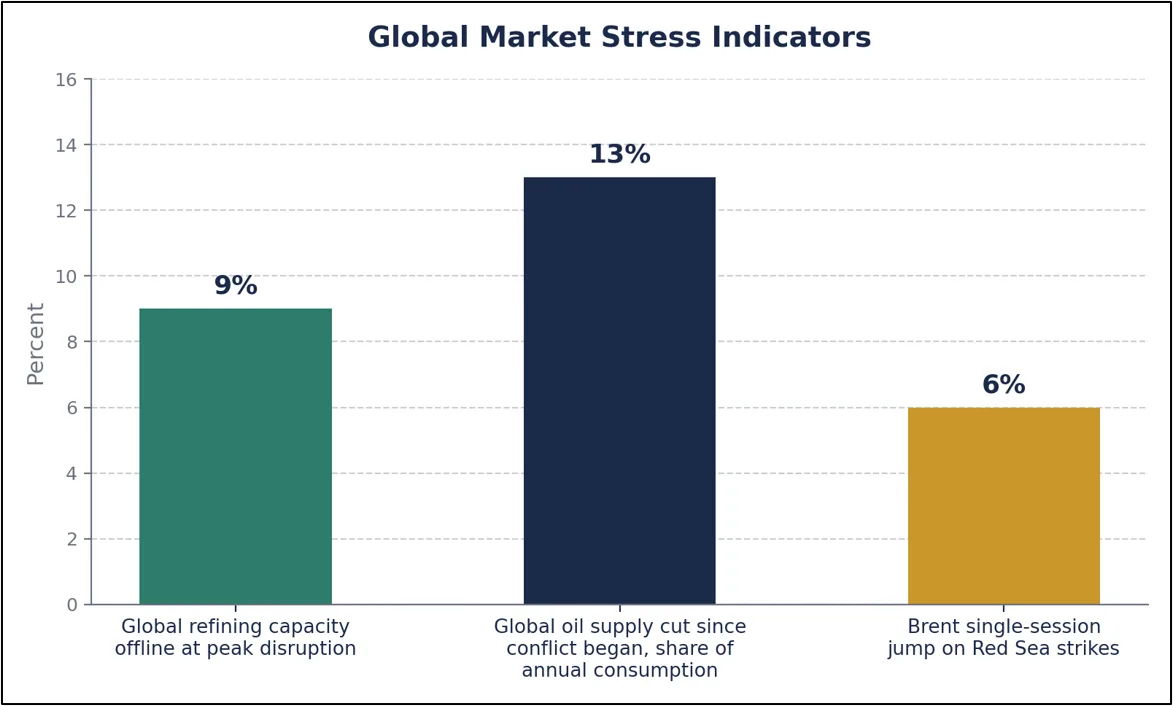
Figure 3. Global market stress indicators tied to the conflict. Source: Price Watch™
Short Term Outlook
Scenario one, contained.
The Red Sea blockade stays limited to isolated tanker strikes, Gulf refiners bring reduced units back online through the third quarter, and China’s reserve drawdown continues to smooth price moves. Under this path, feedstock costs stay elevated but manageable.
Scenario two, two front squeeze.
Bab el-Mandeb sees sustained attacks alongside continued Hormuz disruption, forcing tankers onto longer and costlier routes from both directions at once. Under this path, naphtha, LPG and downstream polymer costs move together and buyers face longer lead times across nearly every Gulf sourced grade.
Scenario three, reserve exhaustion.
China’s Strategic Petroleum Reserve drawdown reaches its practical limit while regional refining and petrochemical capacity remains impaired.
Under this path, the price cushion that has held since February disappears in a short window, and the adjustment could be sharper than the damage itself would have suggested in real time.
Where This Leaves Buyers and Sellers
A war that started over a single strait has now reached a second one, while the petrochemical damage inside Iran continues to compound quietly in the background.
None of the price stability seen so far means the underlying supply picture has improved. It means someone, for now, is absorbing the difference.
If your sourcing plan assumes Gulf refining capacity returns by year end, or assumes Red Sea shipping stays open, or assumes China keeps drawing reserves indefinitely, this is the moment to pressure test each of those assumptions separately.
Which of these three scenarios does your current supply contract actually protect you against, and would your ethylene or polyurethane costs move first, or your shipping lead times?
For anyone tracking offered costs and routing risk across these chokepoints as they shift, Price Watch™ is where the next update on this story will surface first.
Follow Price Watch™ on LinkedIn for real-time Petrochemicals market insights, Petrochemicals price trends, supply chain intelligence, and global commodity updates.