

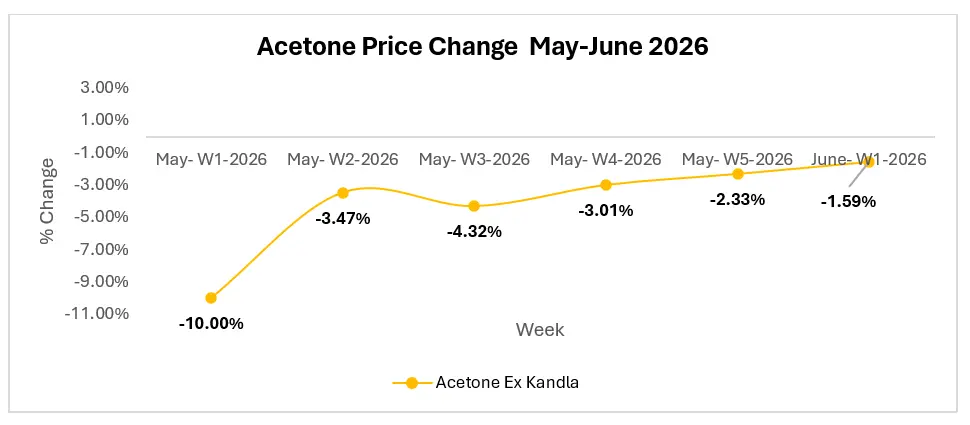
Acetone in India is no longer climbing sharply, but it is not falling either. Prices are holding near ₹123–126 per kg, largely unchanged through the week. That stability is notable because the journey from March to June was far from smooth.
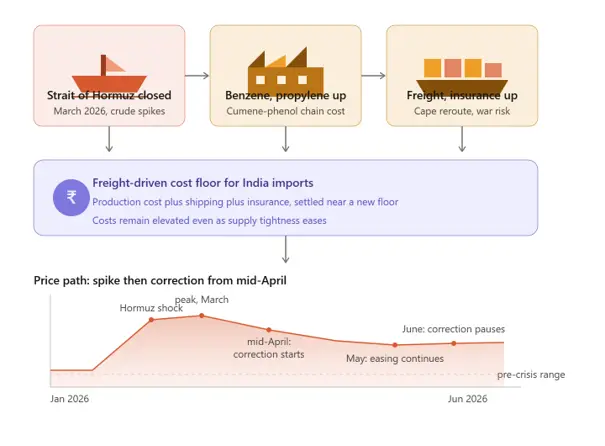
The market’s recent direction was shaped by the Strait of Hormuz disruption in March. Rising crude oil prices pushed benzene and propylene higher, triggering a rapid repricing across the Cumene–Phenol–Acetone value chain. By mid-April, the market began correcting lower, and the decline continued through May. However, June has brought a pause to that correction, leaving acetone prices well above pre-March levels.
Acetone Feedstock Costs Continue to Support Prices
The key feature today is the resilience of the market floor. Although the sharp spike triggered by geopolitical uncertainty has eased, Acetone prices remain supported by elevated feedstock costs. Propylene continues to exert upward pressure on production economics, preventing a deeper correction and helping maintain current price levels.
Regional Acetone Market Dynamics Remain Mixed
Europe is witnessing a similar trend. Acetone prices have softened from their highs, but elevated propylene contract values continue to pressure margins, discouraging aggressive price cuts.
The Middle East remains comparatively insulated due to integrated production and lower feedstock costs. Meanwhile, Asian markets remain more exposed to external disruptions, including currency fluctuations and logistics challenges.
Source: Price-Watch™ Acetone Prices
Key Factors to Watch
Over the next one to three months, the market will focus on two factors:
- Whether Propylene prices soften enough to pull Acetone lower.
- Whether Middle Eastern and US cargo arrivals continue at the pace that triggered the April correction.
Acetone Market Outlook
Demand remains weak, particularly from construction and BPA-linked sectors. At the same time, India’s domestic production capacity remains below demand, ensuring continued dependence on imports.
The key question is whether acetone’s floor holds because producers cannot profitably sell at lower levels, or because buyers have adjusted to a higher pricing environment. That answer is likely to determine market direction during the coming quarter.
Follow Price-Watch™ on LinkedIn for real-time raw material insights, pricing trends, supply chain intelligence, and market updates shaping global commodity markets.