

A notable shift is unfolding across global industrial solvent markets. Concerns surrounding Iran-US tensions, uncertainty over crude oil flows through the Strait of Hormuz, and fears of feedstock shortages pushed prices of key solvents including Dimethylformamide (DMF), Methyl Isobutyl Ketone (MIBK), n-Hexane, and Butyl Glycol to elevated levels across major regions.
However, the sharp correction that emerged in May signals a broader structural shift. The market is moving away from a supply-risk narrative and toward a demand-driven situation.
From Crisis Pricing to Fundamental Rebalancing
The safe passage of crude oil cargoes through the Strait of Hormuz, easing logistics constraints, and declining feedstock costs have removed much of the geopolitical tension that fueled the earlier rally. As a result, industrial solvent producers are facing lower production costs, while buyers are becoming increasingly selective in their purchasing decisions.
The market is no longer asking whether supply will be available it is asking whether demand is strong enough to absorb the returning volumes.
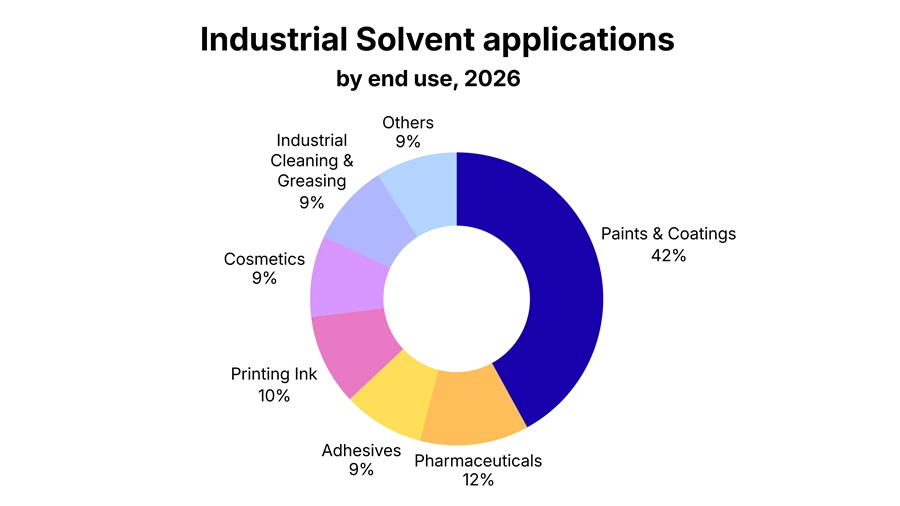
Source: Price Watch™
Asia Leads the Correction Cycle
Asia, particularly China, has become the focal point of the global correction. Major solvents such as DMF, widely used in pharmaceutical, and MIBK, a critical solvent for paints and coatings, have witnessed substantial declines since May after recording strong gains during March and April.
China’s import and domestic DMF markets have entered a clear correction phase, while MIBK import prices have softened and prices have fallen sharply following multiple rounds of price cuts by major domestic producers.
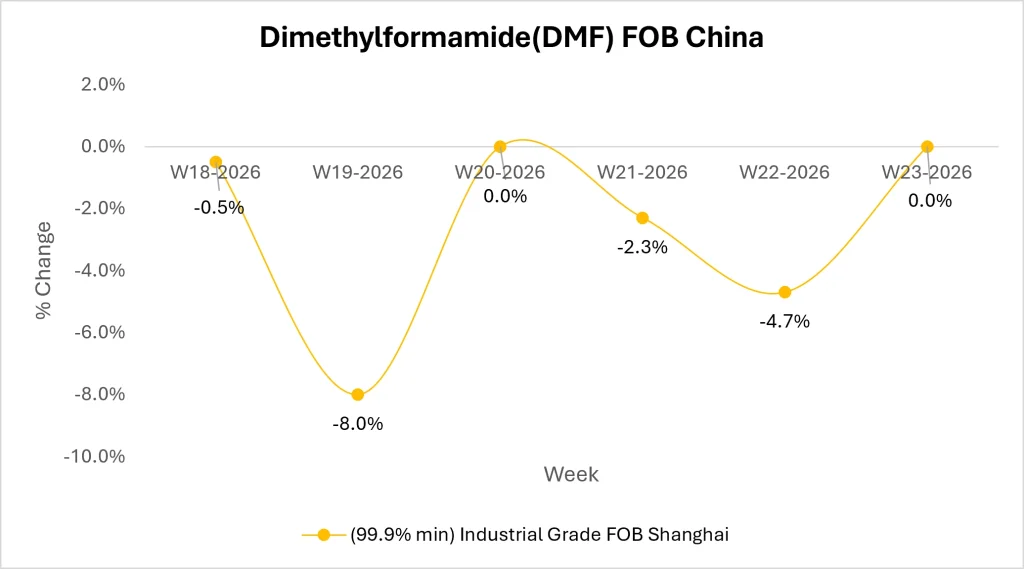
Source: Price Watch™ DMF Prices
The same trend is visible in the n-Hexane market. Prices have retreated significantly as supply conditions improved and sellers struggled to maintain previous price levels. While lower feedstock costs have contributed to the decline, the more important development is the shift in buyer behavior.
Downstream consumers have become increasingly cautious, delaying purchases and reducing inventory accumulation in anticipation of further price decreases. This transition from supply-driven tightness to demand-driven weakness has fundamentally altered pricing dynamics across the Asian solvent market.
Europe Remains Supported by Structural Supply Constraints
Europe has followed a different trajectory. Although solvent prices have experienced some downward correction, regional markets continue to face persistent supply-side challenges. Elevated energy costs, production disruptions, moderated operating rates, and limited product availability continue to support pricing across several solvent categories.
Butyl Glycol provides a clear example of these dynamics. Following a sharp decline at the beginning of May, the market quickly regained momentum as low availability and active buying interest tightened supply conditions. Earlier production shutdowns and reduced operating rates created shortages that continue to influence market sentiment.
As a result, Europe remains more sensitive to raw material availability, creating a contrast with the more demand-focused environment currently observed in Asia.
Solvent Market Outlook Caught Between Supply Recovery and Demand Uncertainty
The outlook for the second half of 2026 suggests continued pressure on industrial solvent market as improving supply conditions and lower production costs outweigh immediate demand growth. The return of cargo flows, normalization of logistics networks, and recovering operating rates are expected to limit the potential for sustained price increases across most solvent categories.
Nevertheless, the market remains highly exposed to geopolitical developments. Any renewed escalation in Iran-US tensions, disruption to shipping through the Strait of Hormuz, or sharp increase in crude oil prices could quickly tighten supply chains and reintroduce a risk across solvent markets. At the same time, prolonged weakness in downstream consumption could extend the correction cycle further than many market participants currently anticipate.
If geopolitical tensions once again disrupt Middle Eastern trade routes, how quickly could today’s oversupplied market revert to another period of supply-driven price inflation? Stay tuned with Price Watch™ for more updates on industrial solvent market.
Follow Price Watch™ on LinkedIn for real-time raw material insights, pricing trends, supply chain intelligence, and market updates shaping global commodity markets.